Your First Ten Minutes Outdoors
by Eric Gonzalez-Payne
The session is decided before the activity starts
Groups that go outside and begin an activity immediately spend the next twenty minutes being wrangled. Groups that run the same opening every time settle in about ninety seconds.
The sequence that works
Walk the boundary. Every time, even when they know it. Thirty seconds.
Sit down somewhere specific. The same spot. Sitting resets a group better than any instruction.
Two minutes of listening. Nothing else. Just listen and then say one thing you heard. This is the piece adults skip and it is the piece that does the work.
Crush a leaf and pass it round. A sensory anchor that says the session has begun.
Then the activity.
Why the listening matters
It is not mindfulness and you do not need to call it anything. It slows the group down, it moves attention outward, and it converts the excitement of being outside into attention rather than noise.
Two minutes. Most groups manage forty seconds at first and get there within a fortnight.
Same order, same place, every time
The routine does the work, not the content. Within three weeks children start walking the boundary and sitting down without being asked, and you have got ten minutes of your session back.
The close matters too
Gather at the same spot. One thing each, in a sentence. Tools away. Then in.
What to cut when time is short
Not the opening. Cut the activity. A short session with the routine intact is worth more than a long one without it, because the routine is what you are actually building.
Eric Gonzalez-Payne
Founder and curriculum author
Ed.M. in Educational Leadership, Harvard Graduate School of Education
Published by Empathy Global LLC
LinkedIn
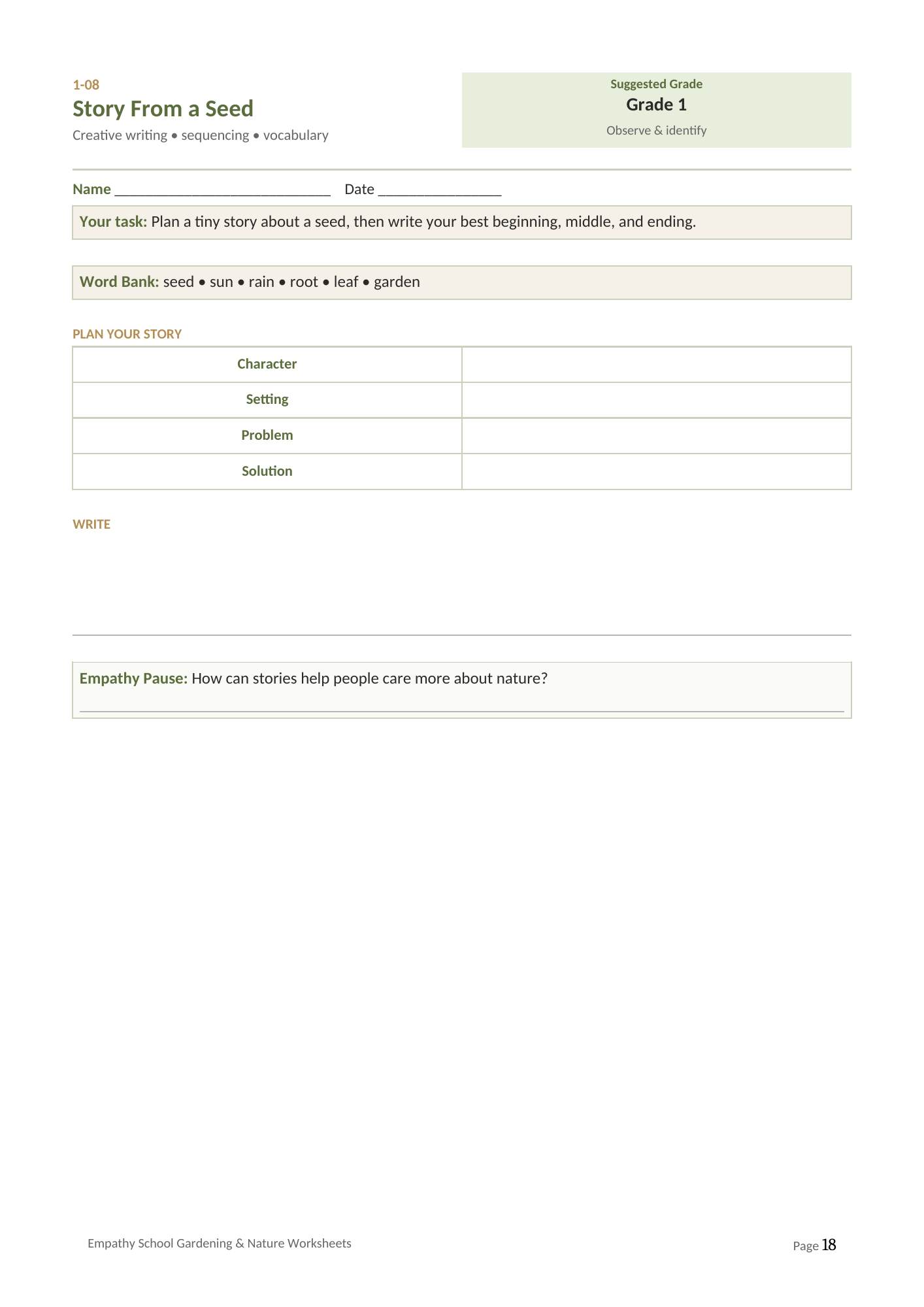
For the full social and emotional learning programme, see the Empathy Curriculum at empathy.kids.