Running a Classroom Rice Tray
by Eric Gonzalez-Payne
What it is
A shallow waterproof container, about ten centimetres of soil, water held a couple of centimetres above the soil surface, and rice seedlings pushed in by hand.
That is it. It fits on a table and it carries a whole term.
Starting it
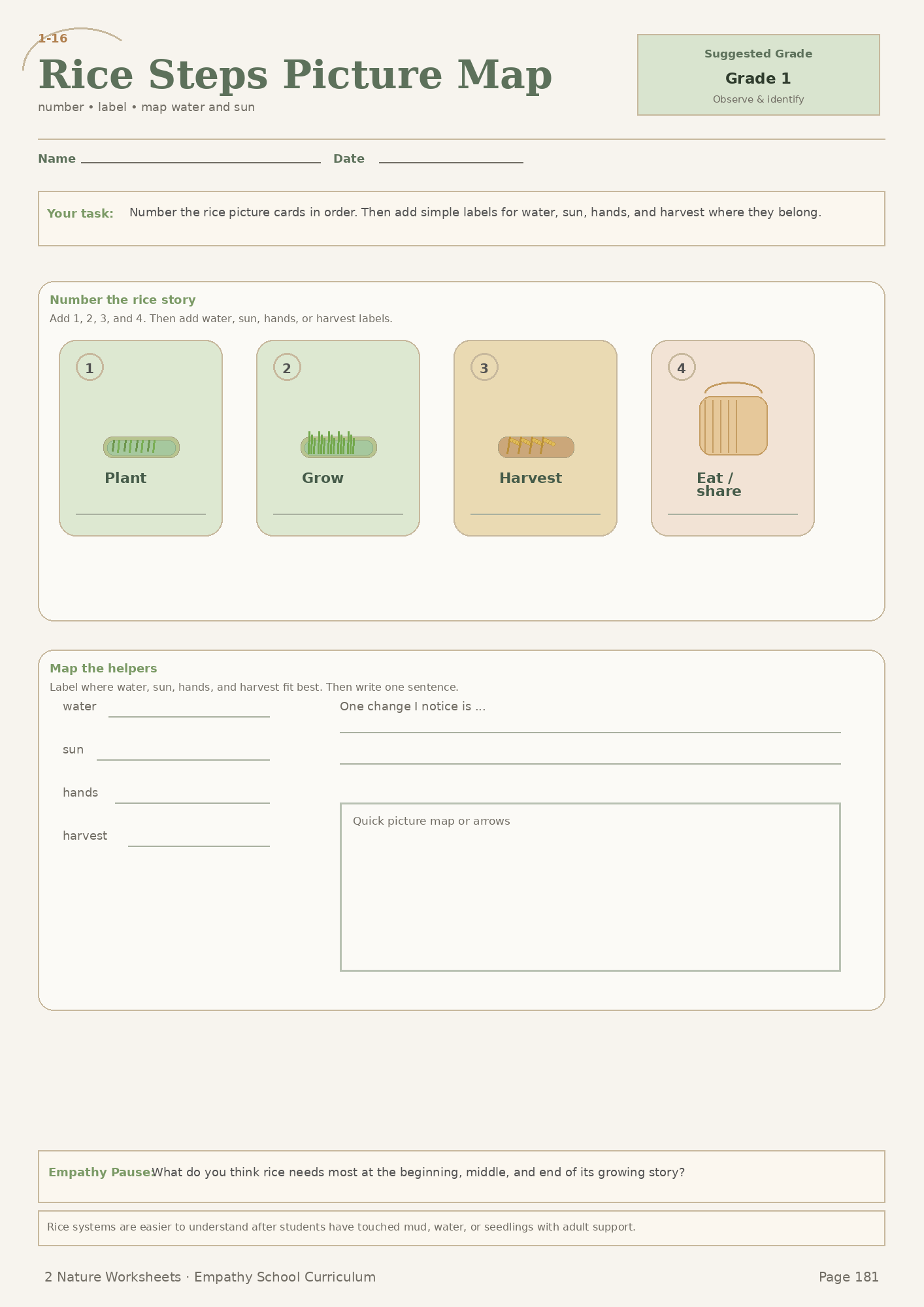
Soak rice grain overnight. Sow thickly in a seed tray of wet soil. In two weeks you have seedlings about fifteen centimetres tall.
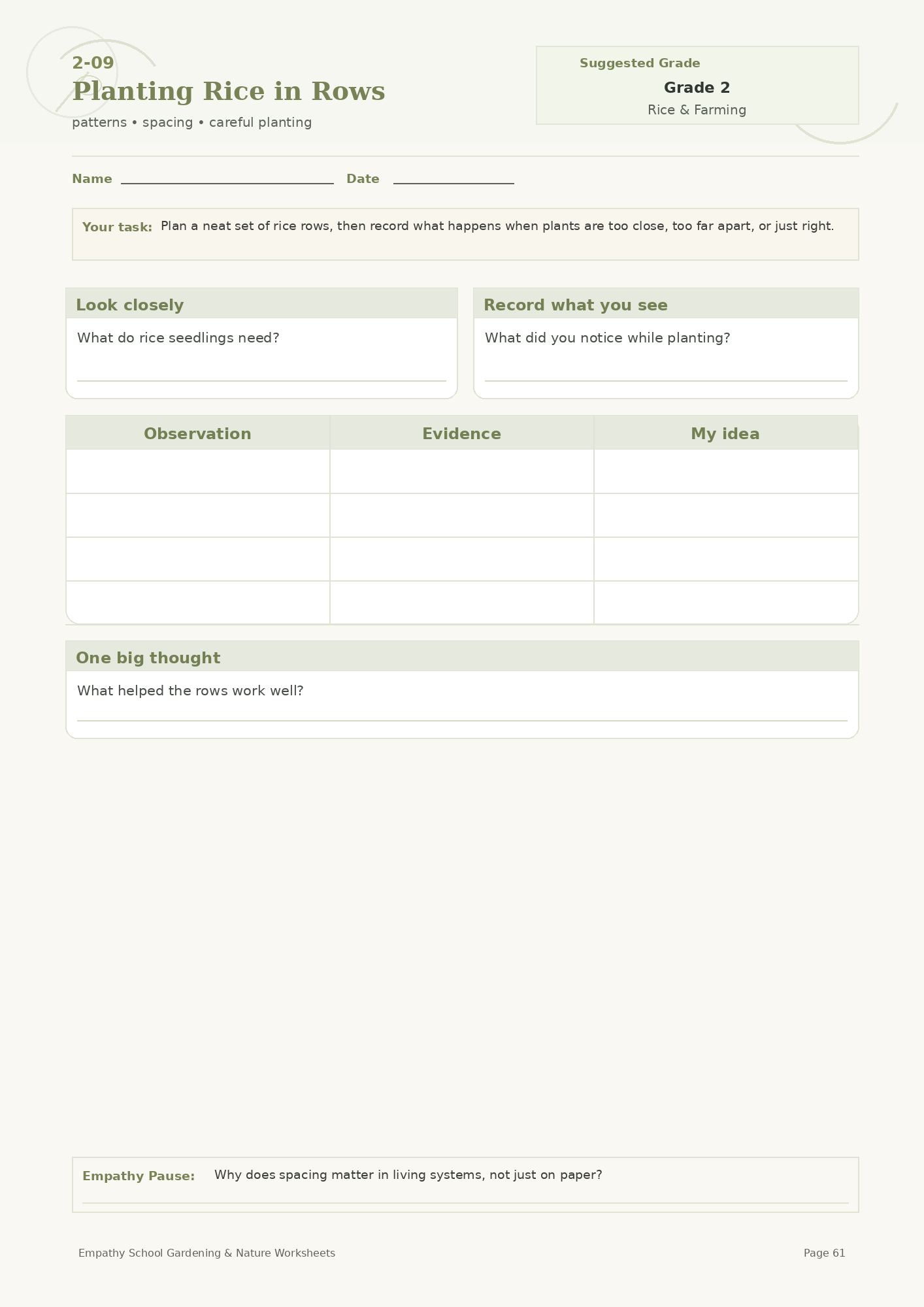
Transplant those into the main tray, one at a time, pushed in with a finger. Children can and should do this part. Spacing about ten centimetres, which they will ignore, and ignoring it produces its own lesson four weeks later.
Keeping it alive
Water above soil level at all times. Rice is one of the few crops that wants standing water and it will not forgive drying out.
Direct sun for at least half the day. A dark classroom corner will not work.
Top up daily. Make it a named job on a rota. This is where classroom trays die, always, and always over a holiday.
What you get out of it
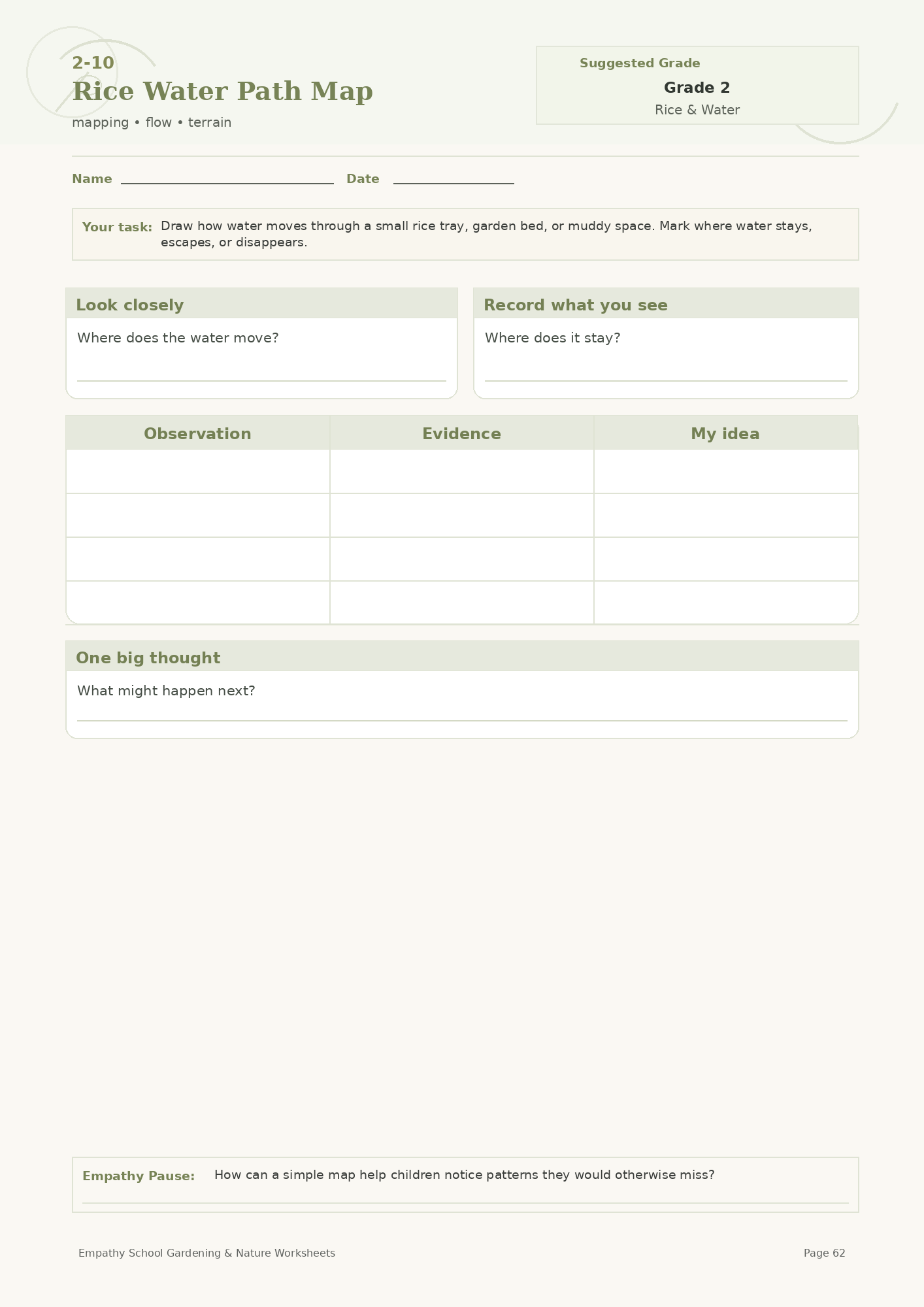
Water level marking and the where did it go question. A shaded tray against a sunny tray as a controlled comparison. Height measurement weekly. Harvest, threshing, winnowing and bundling into tens. A yield that is disappointingly small and teaches more than a large one would.
Timing
A full cycle to harvest takes three to four months. Start it in the first week of a term or you will be harvesting in the holidays. We have made that mistake and came back to a tray of dead straw.
The honest limit
Indoors, in a tray, without much sun, you may not get grain at all. Say so at the start. A failed crop that the class can diagnose is a better science lesson than a successful one they did not have to think about.

Eric Gonzalez-Payne
Founder and curriculum author
Ed.M. in Educational Leadership, Harvard Graduate School of Education
Published by Empathy Global LLC
LinkedIn
For the full social and emotional learning programme, see the Empathy Curriculum at empathy.kids.