How to Ask a Child a Good Question Outdoors
by Eric Gonzalez-Payne
Most adult questions have an answer in mind
What colour is this leaf. How many petals. Is this a plant or an animal.
Children answer those quickly and stop thinking, because the transaction is complete. The adult wanted a thing, the child produced it.
The questions that open something
What do you notice. Not what do you see, which gets a list.
What is the same and what is different. Comparison is the beginning of nearly all reasoning.
Why do you think it does that. Accept any answer that is reasoned, including the wrong ones. What you are training is the willingness to propose.
What would happen if. This is where prediction starts and it is the highest value question on this page.
How could we find out. The one that turns an opinion into an investigation.
Wait longer than feels comfortable
Most adults wait under two seconds before helping. Children usually start speaking somewhere between four and eight seconds.
Count silently to eight. It will feel much longer than it is. This one change does more for the quality of talk than any question you could choose.
Do not correct immediately
A child who says the roots drink the rain has a workable model that will get refined. Correcting it instantly teaches that guessing is unsafe.
Ask how they could check instead.
Say less overall
The single most common reason outdoor sessions go flat is that the adult keeps talking. If you find yourself explaining, stop and ask instead.

Eric Gonzalez-Payne
Founder and curriculum author
Ed.M. in Educational Leadership, Harvard Graduate School of Education
Published by Empathy Global LLC
LinkedIn

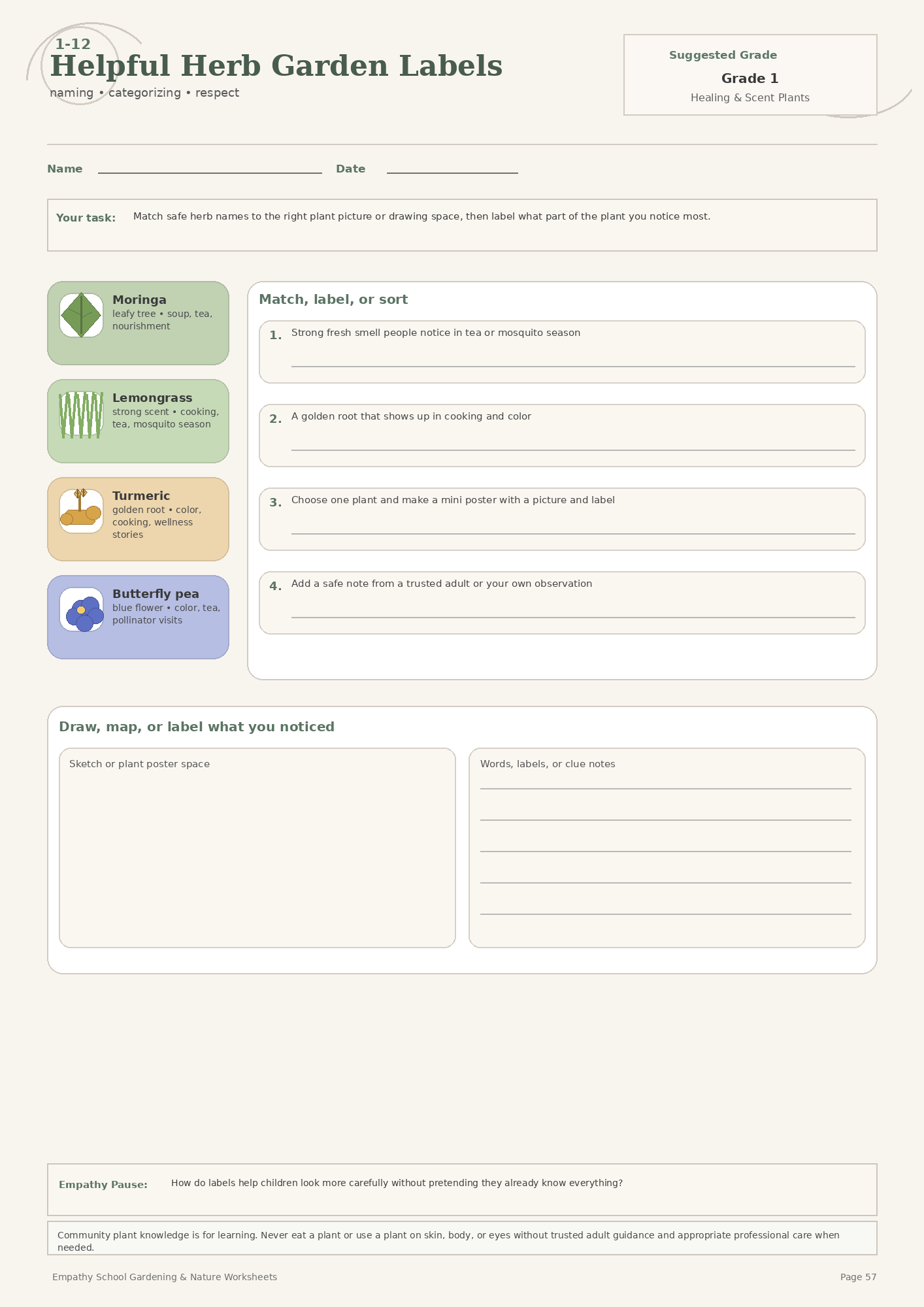
For the full social and emotional learning programme, see the Empathy Curriculum at empathy.kids.