Beach Scavenger Hunt
by Eric Gonzalez-Payne
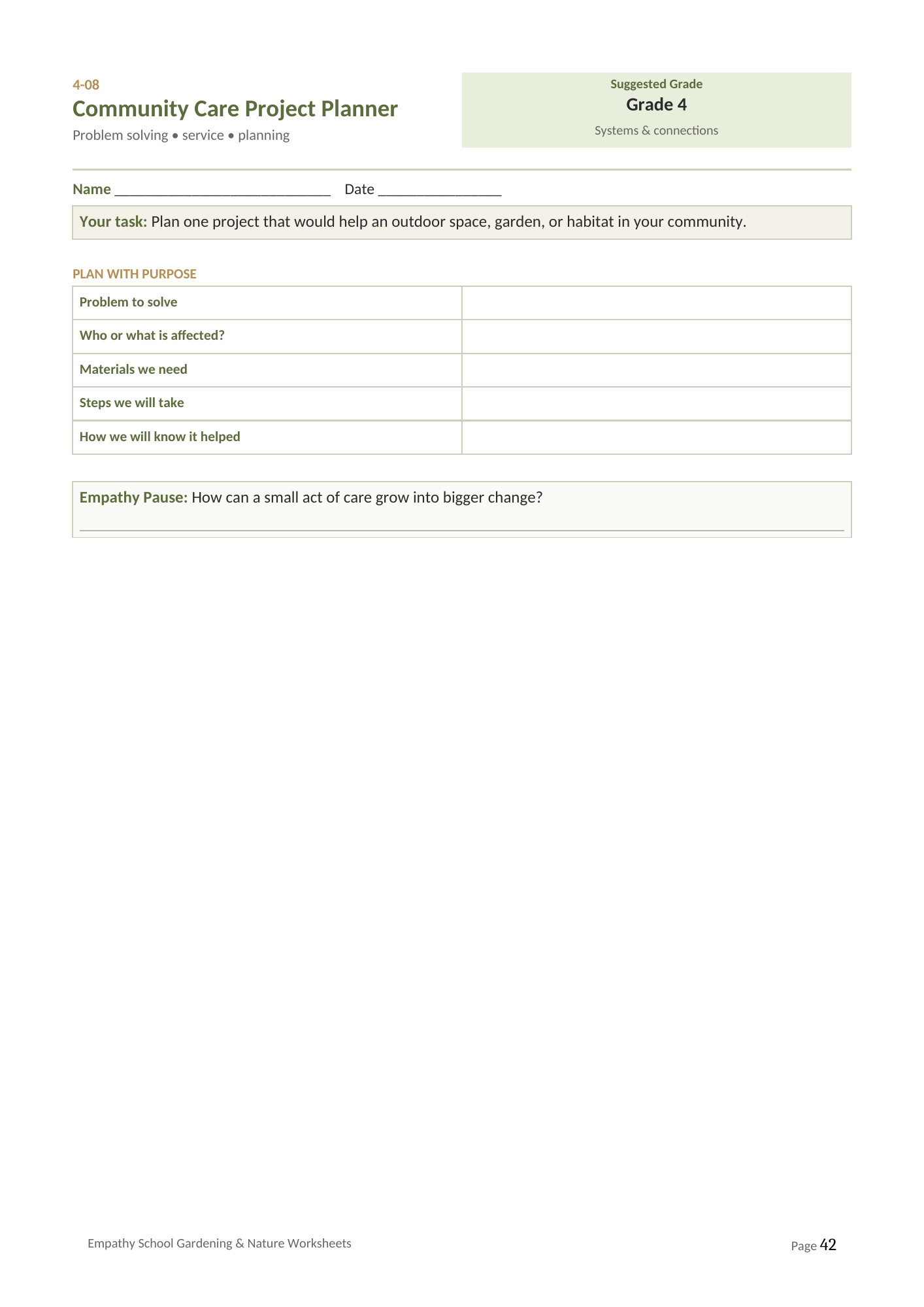
Beach hunts usually end with a bag of shells and nothing learned. This one asks where things came from.
The hunt
Print it, write it on a scrap of paper, or just read it out. It works either way.
1. Something that was alive
2. Something that was never alive
3. Something made by a person
4. Something worn smooth by the sea
5. Something broken by the sea
6. Something that floated here
7. Something that lives here right now
8. The oldest thing you can find, and why you think so
How to run it
Forty minutes. A bucket each. Stay above the tide line for safety and below it for the interesting things, which is a decision you make based on conditions.
Item eight has no correct answer and is the best question on the list. A child arguing that a rock is older than a shell is doing geology.
For younger children
Four items, and let them keep what they find. Alive, not alive, smooth, and one favourite.
For older children
Sort the human made items by material and estimate how long each would take to break down. That conversation goes somewhere real and does not need a lecture attached.
What to do afterwards
Everything human made goes in a bag and comes home with you. Do not make a speech about it. Doing it silently teaches more.
More like this
Every hunt on this site is free and needs no preparation. See the Start Here pages if you want them ordered by age.
Eric Gonzalez-Payne
Founder and curriculum author
Ed.M. in Educational Leadership, Harvard Graduate School of Education
Published by Empathy Global LLC
LinkedIn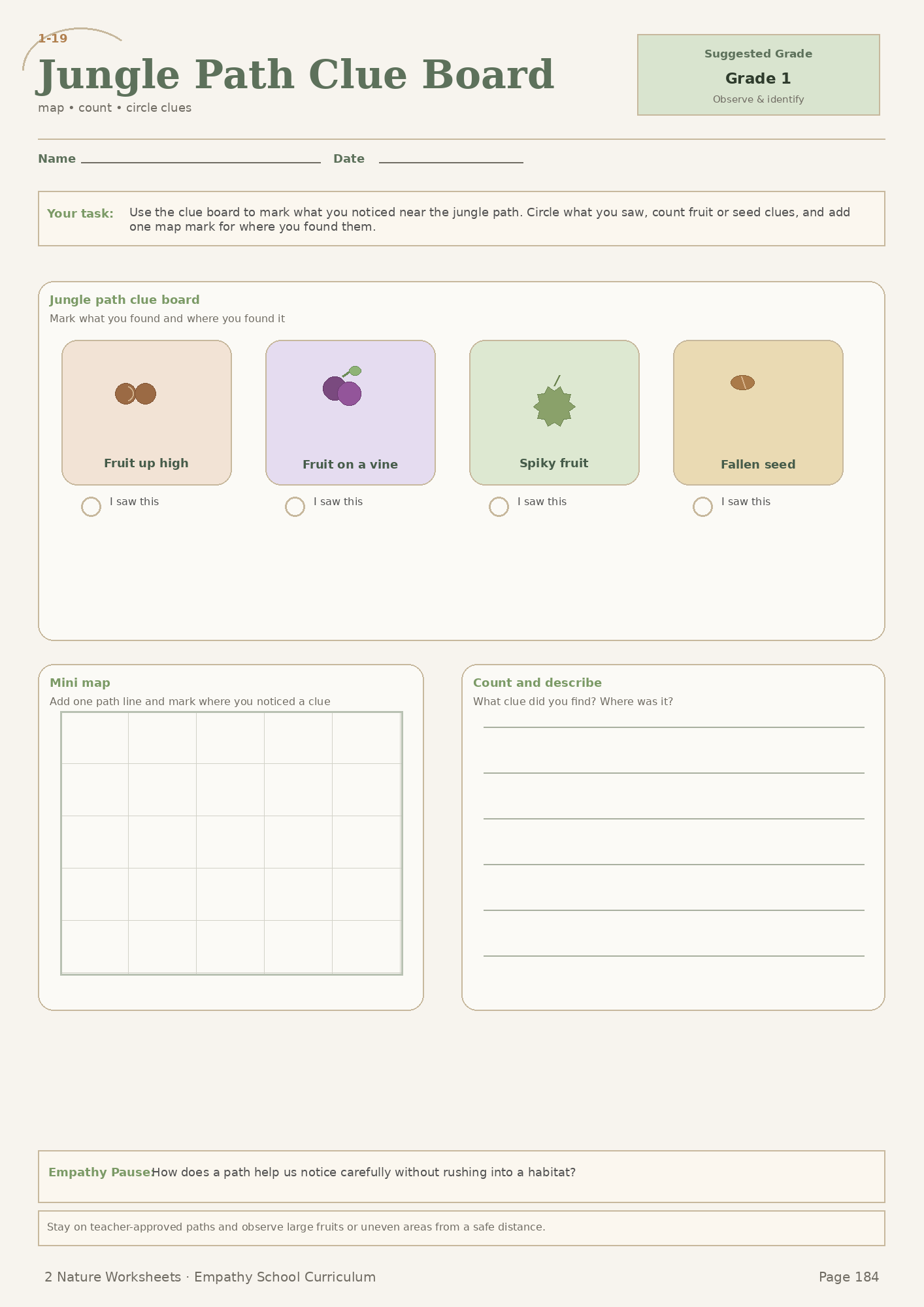
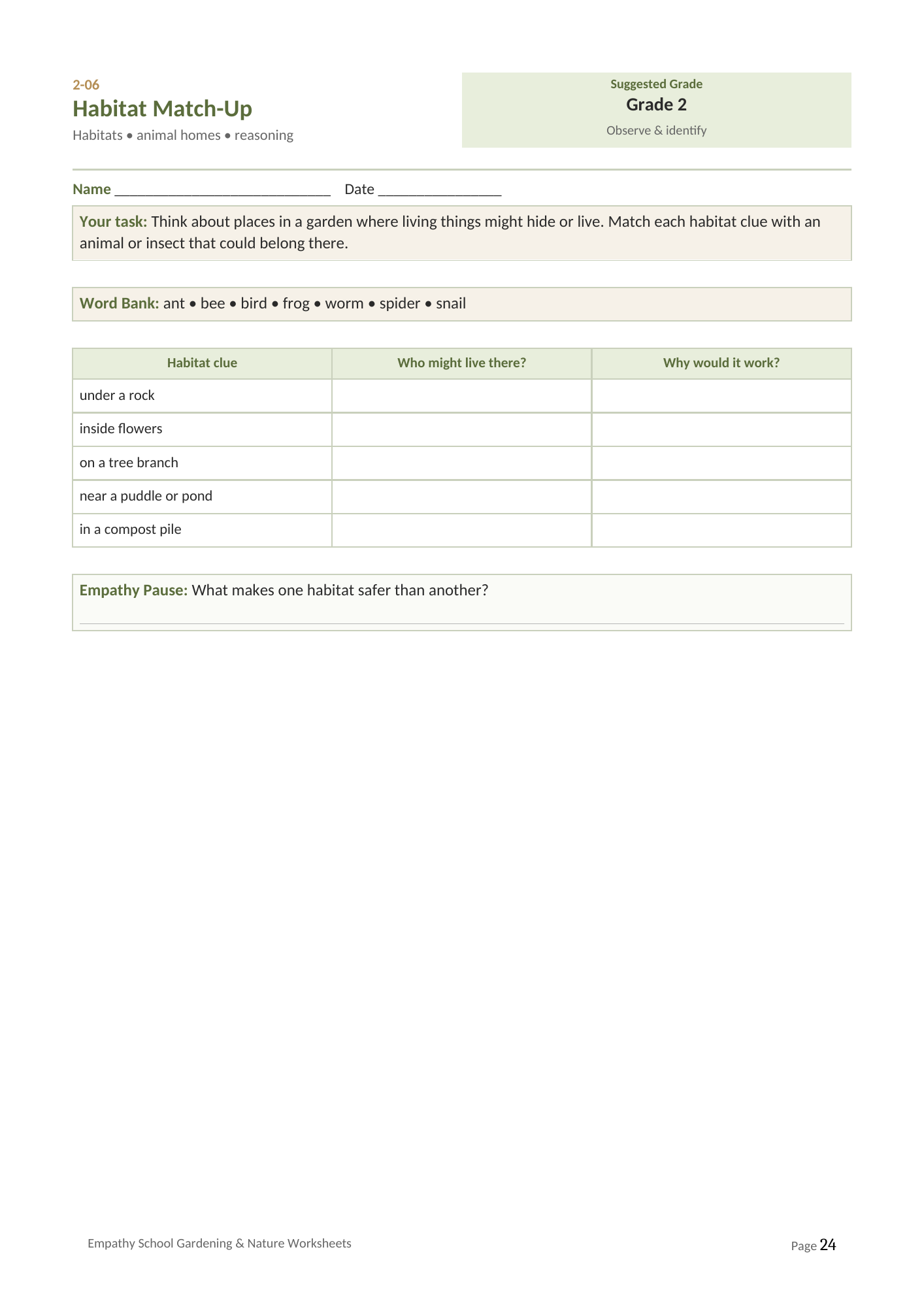
For the full social and emotional learning programme, see the Empathy Curriculum at empathy.kids.