Sound Scavenger Hunt
by Eric Gonzalez-Payne
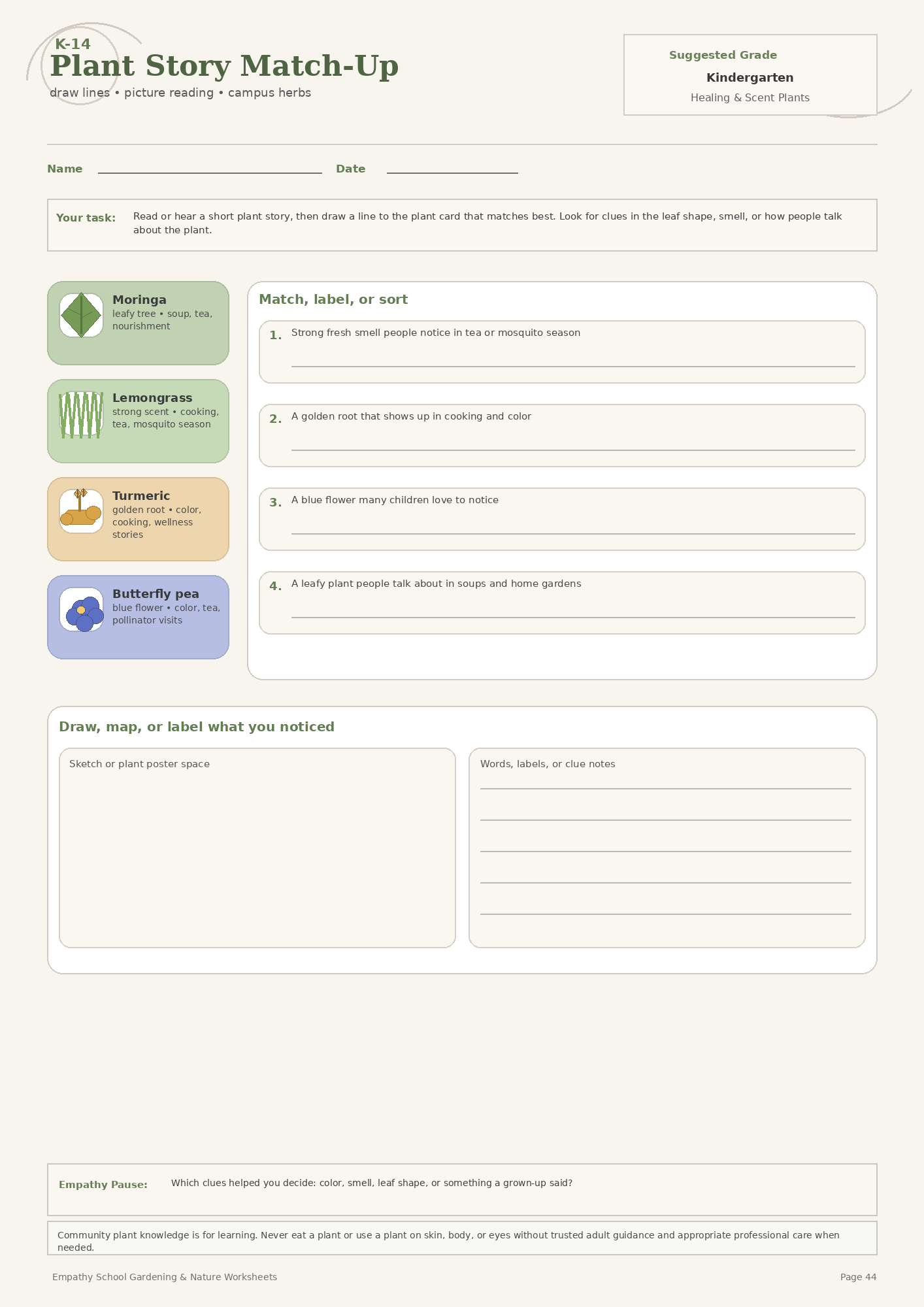
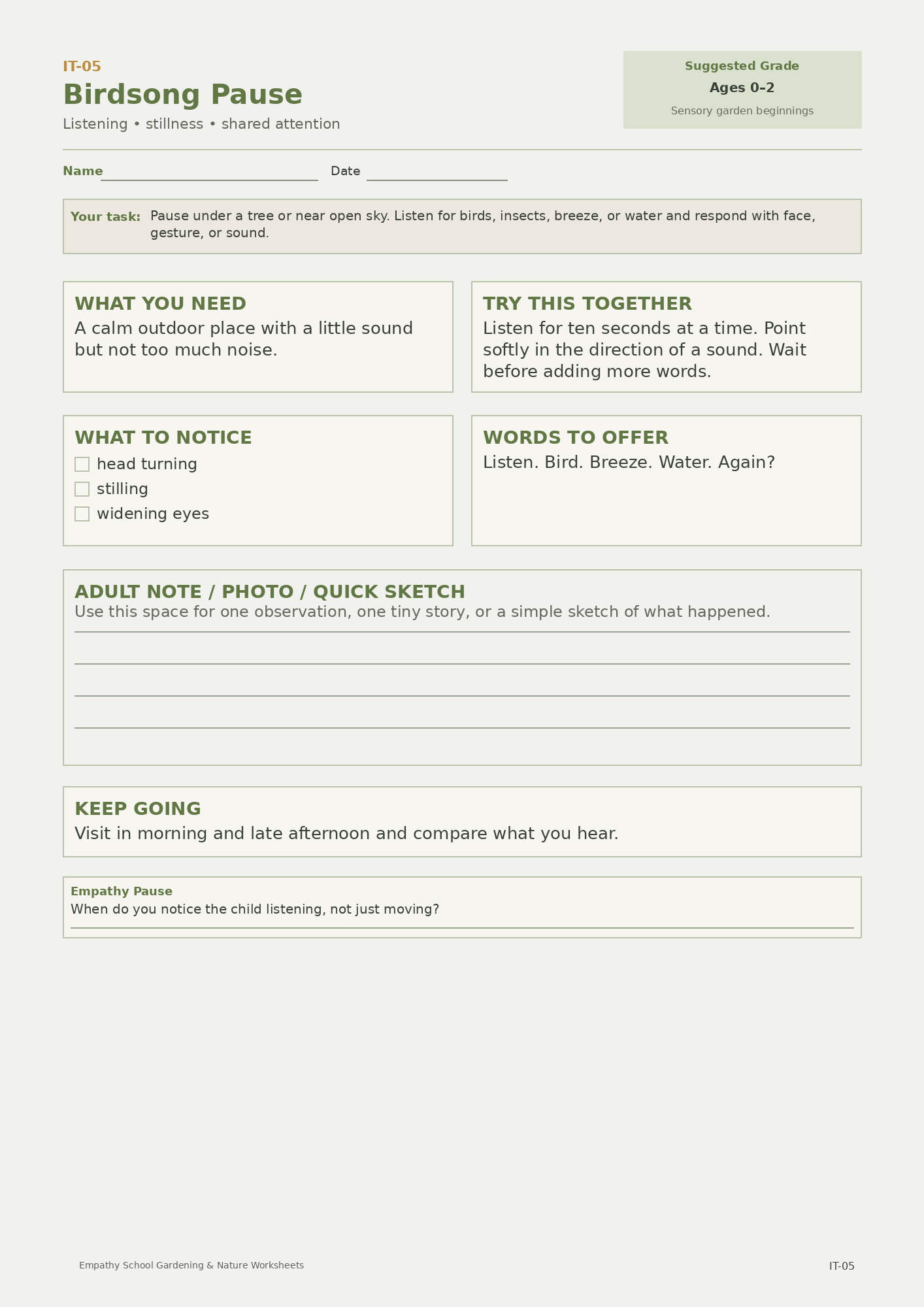
Nobody moves. Nothing is collected. Children who cannot sit still for a story will do this for ten minutes, because the task is listening rather than being quiet.
The hunt
Print it, write it on a scrap of paper, or just read it out. It works either way.
1. A bird
2. Something made by a person
3. Something far away
4. Something very close
5. A sound made by water or wind
6. The quietest sound you can hear
7. A sound you cannot identify
How to run it
Everyone sits, spread out enough that they are not touching. Ten minutes. Hold up a finger for each new sound, or tick the list.
The last item is the important one. An unidentified sound is a mystery, and children will hunt for the source of it long after the activity has ended.
For younger children
Two minutes, three sounds. Sit with them rather than opposite them.
For older children
Map it instead. Draw a circle with yourself at the centre and mark each sound by direction and rough distance. Do it again at a different time of day and compare. Dawn against midday is dramatic almost everywhere.
What to do afterwards
Go round and let everyone name one sound. The overlap is the interesting part, because two children sitting three metres apart will report different things.
More like this
Every hunt on this site is free and needs no preparation. See the Start Here pages if you want them ordered by age.
Eric Gonzalez-Payne
Founder and curriculum author
Ed.M. in Educational Leadership, Harvard Graduate School of Education
Published by Empathy Global LLC
LinkedIn

For the full social and emotional learning programme, see the Empathy Curriculum at empathy.kids.