Minibeast Hunt
by Eric Gonzalez-Payne
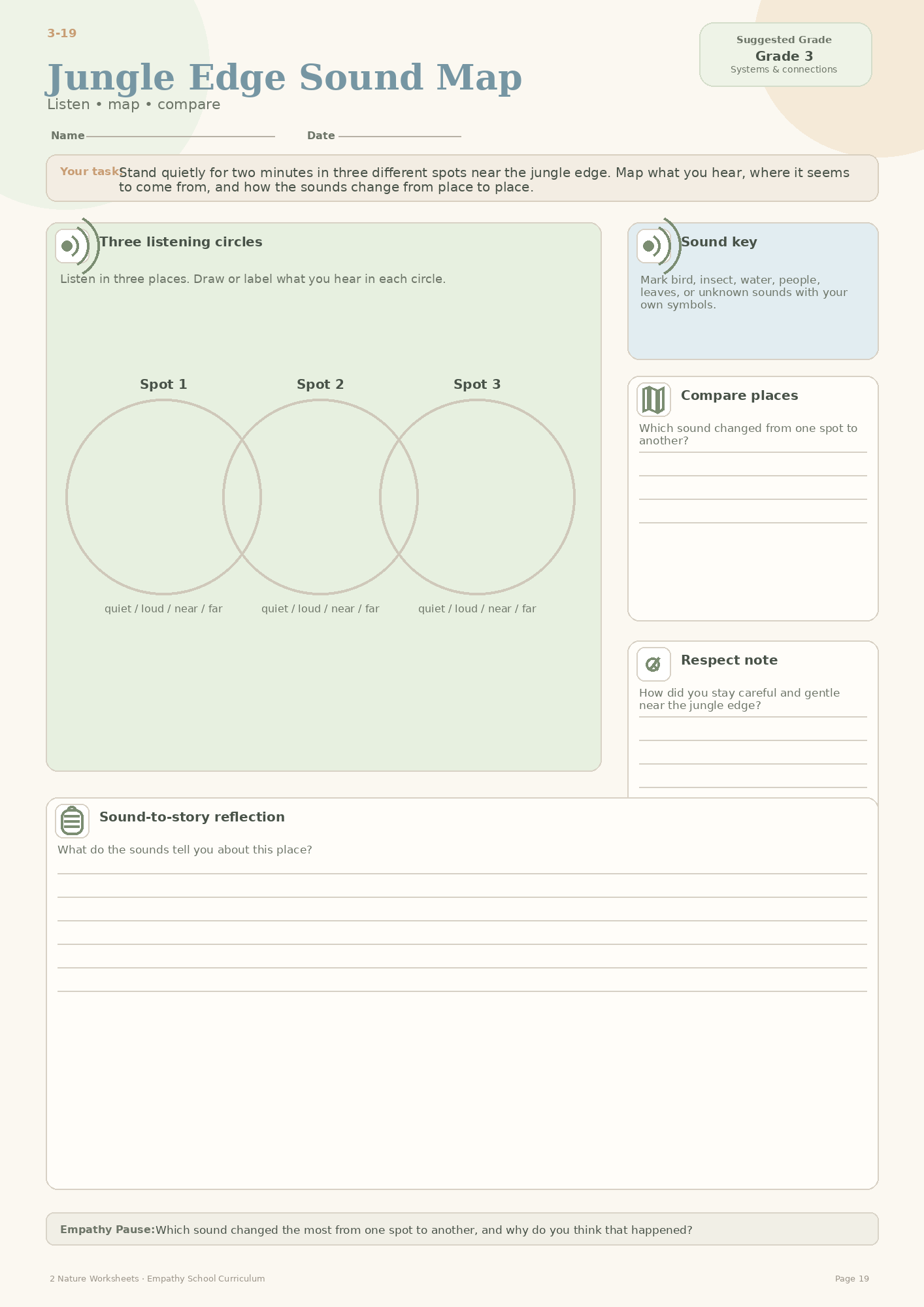
Children want to find creatures more than they want to find anything else. This tells them where to look, which is the part that decides whether it works.
The hunt
Print it, write it on a scrap of paper, or just read it out. It works either way.
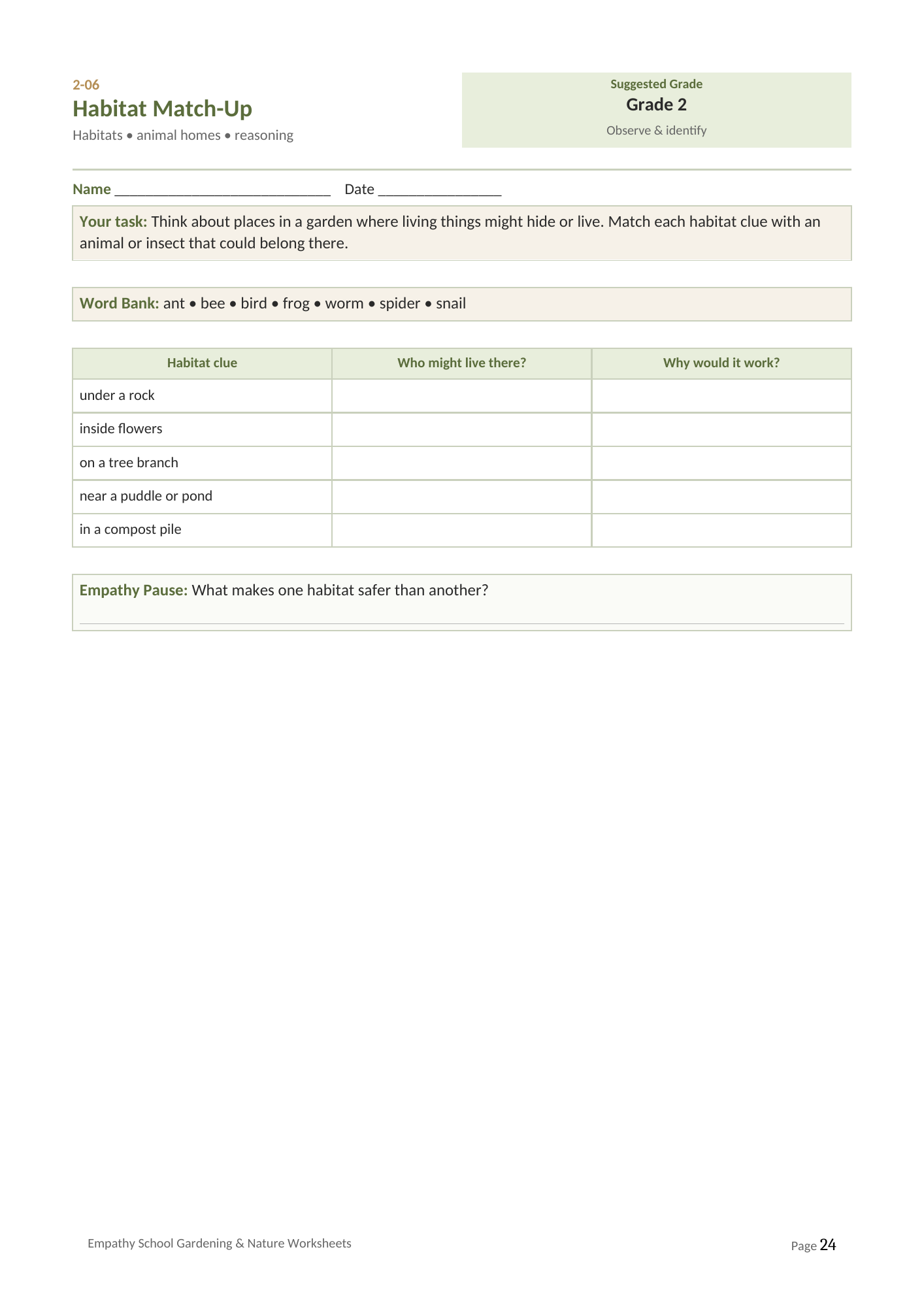
1. Something under a log or stone
2. Something under a leaf
3. Something in the soil
4. Something on a wall
5. Something flying
6. Something that has left a sign but is not there
7. Something with more than eight legs
8. Something you cannot name
How to run it
Forty minutes. Give a magnifier and a plain white tray. A tray changes everything, because a creature on white is visible in a way it never is on soil.
The rule, said before you start: everything goes back exactly where it came from, and every log gets rolled back the way it was.
For younger children
Under logs only, and let them use a spoon rather than fingers. Woodlice and worms are enough.
For older children
Sample three habitats systematically and compare. Damp, dry, high, low. Then explain the difference. That is ecology rather than collecting.
What to do afterwards
Draw one, magnified, with as many legs as it actually had. Counting legs properly is harder and more useful than it sounds.
More like this
Every hunt on this site is free and needs no preparation. See the Start Here pages if you want them ordered by age.
Eric Gonzalez-Payne
Founder and curriculum author
Ed.M. in Educational Leadership, Harvard Graduate School of Education
Published by Empathy Global LLC
LinkedIn
For the full social and emotional learning programme, see the Empathy Curriculum at empathy.kids.