When a Child Is Frightened of an Insect
by Eric Gonzalez-Payne

Do not minimise it
It is only a spider is the worst available response. It tells a frightened child that their reaction is wrong and that you are not a useful person to be frightened near.
Do not make it a demonstration
Picking the insect up and bringing it closer to prove it is harmless is the second worst. It is coercion with a smile on it.
What actually works
Move away first, with the child, without urgency. Distance restores enough calm for anything else to be possible.
Name what happened plainly. That surprised you. That is a big one.
Then give control back. You decide how close we go. Nobody is going to make you touch it.
The ladder, over weeks not minutes
Look at a picture. Look at one from across the room. Look at one in a jar. Stand near one outside. Watch somebody else near it.
Most children arrive at the end of that ladder on their own within a term, provided nobody pushed.
Knowledge does most of the work
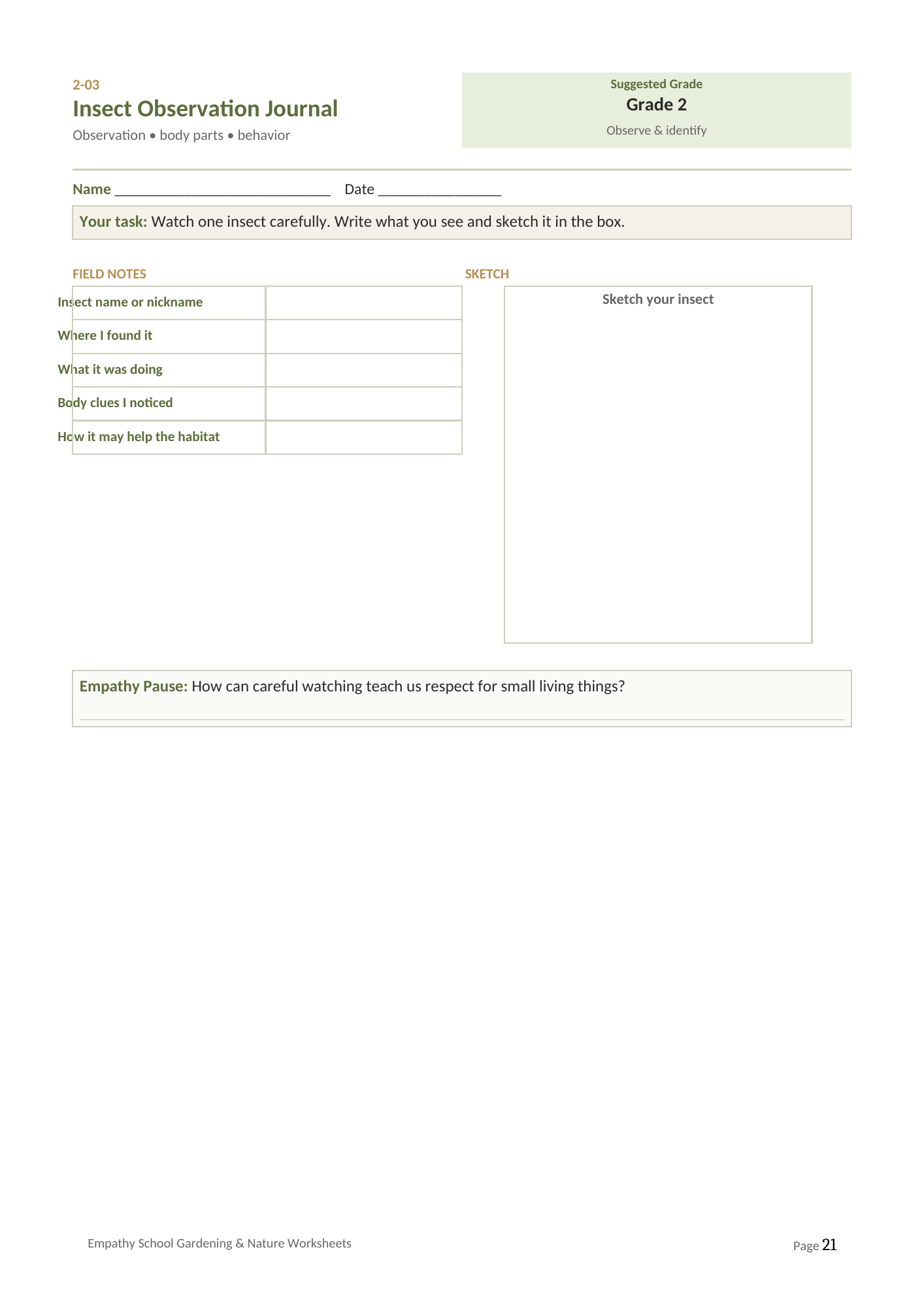
Fear of insects is usually fear of unpredictability. A child who knows what an ant is doing, where it is going and why is much less frightened than a child who does not.
Teach the insect rather than treating the fear.
The adults matter more than you think
If an adult in the room reacts to a cockroach or a spider, the children learn that in one second and it takes months to undo. Whatever you actually feel, be boring about it.
When it is more than this
A reaction that is extreme, that does not shift at all over months, or that stops a child coming outside, is worth a quiet word with a parent. Most are not. But notice.

Eric Gonzalez-Payne
Founder and curriculum author
Ed.M. in Educational Leadership, Harvard Graduate School of Education
Published by Empathy Global LLC
LinkedIn

For the full social and emotional learning programme, see the Empathy Curriculum at empathy.kids.