*Oryza sativa*
How to know it
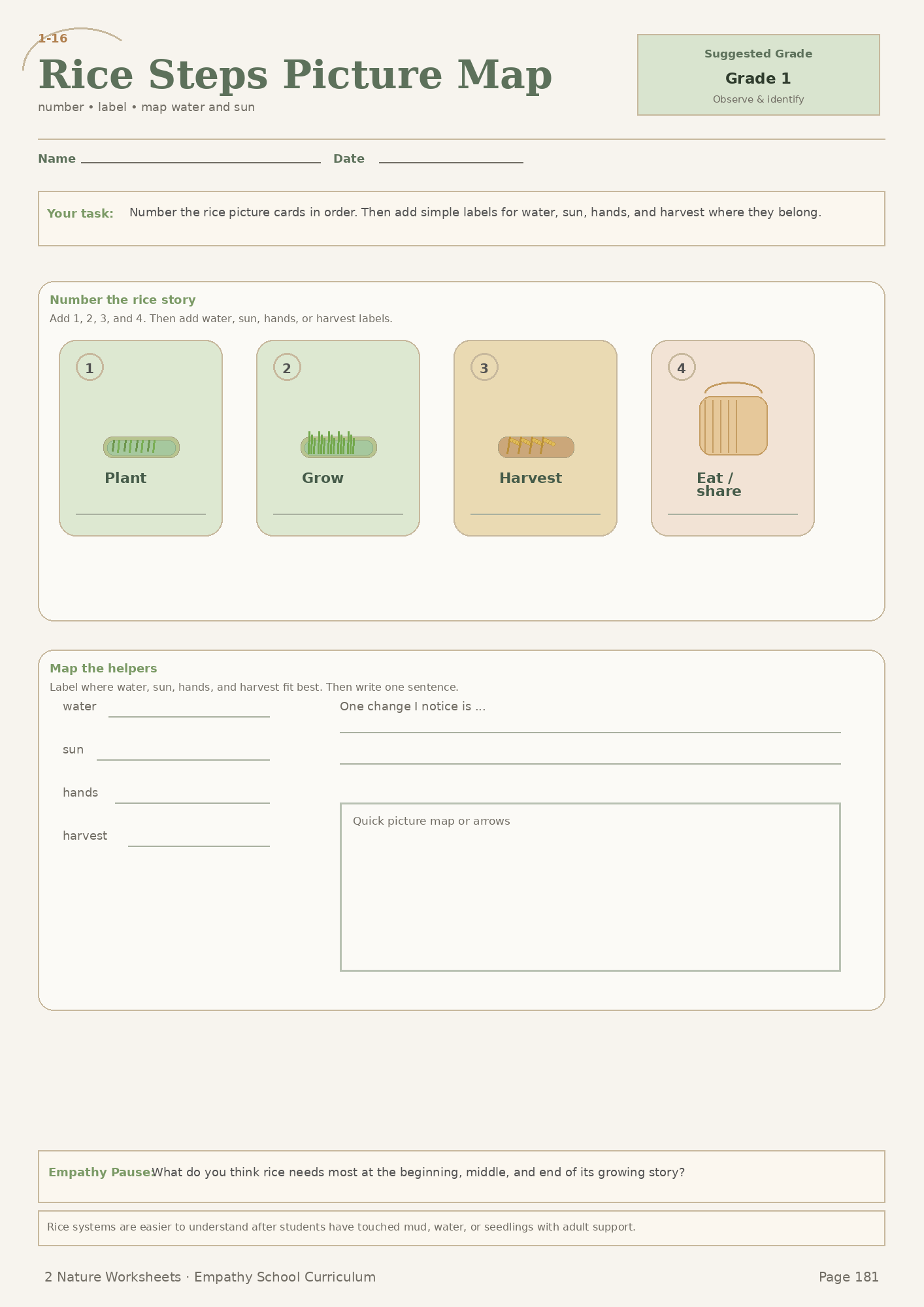
A grass, waist high, with narrow blades and a drooping head of grain when mature. Grown in flooded fields and terraces. The seedlings are transplanted by hand into wet mud.
What it does
The staple food of the region. Beyond that, a rice field is a working water system and an ecosystem holding frogs, dragonflies, spiders, eels and birds. The straw becomes bedding, mulch, board and mushroom substrate.
Safety
Entirely safe. Uncooked grain in a sensory tray needs supervision with children under three.
Two things to do with children
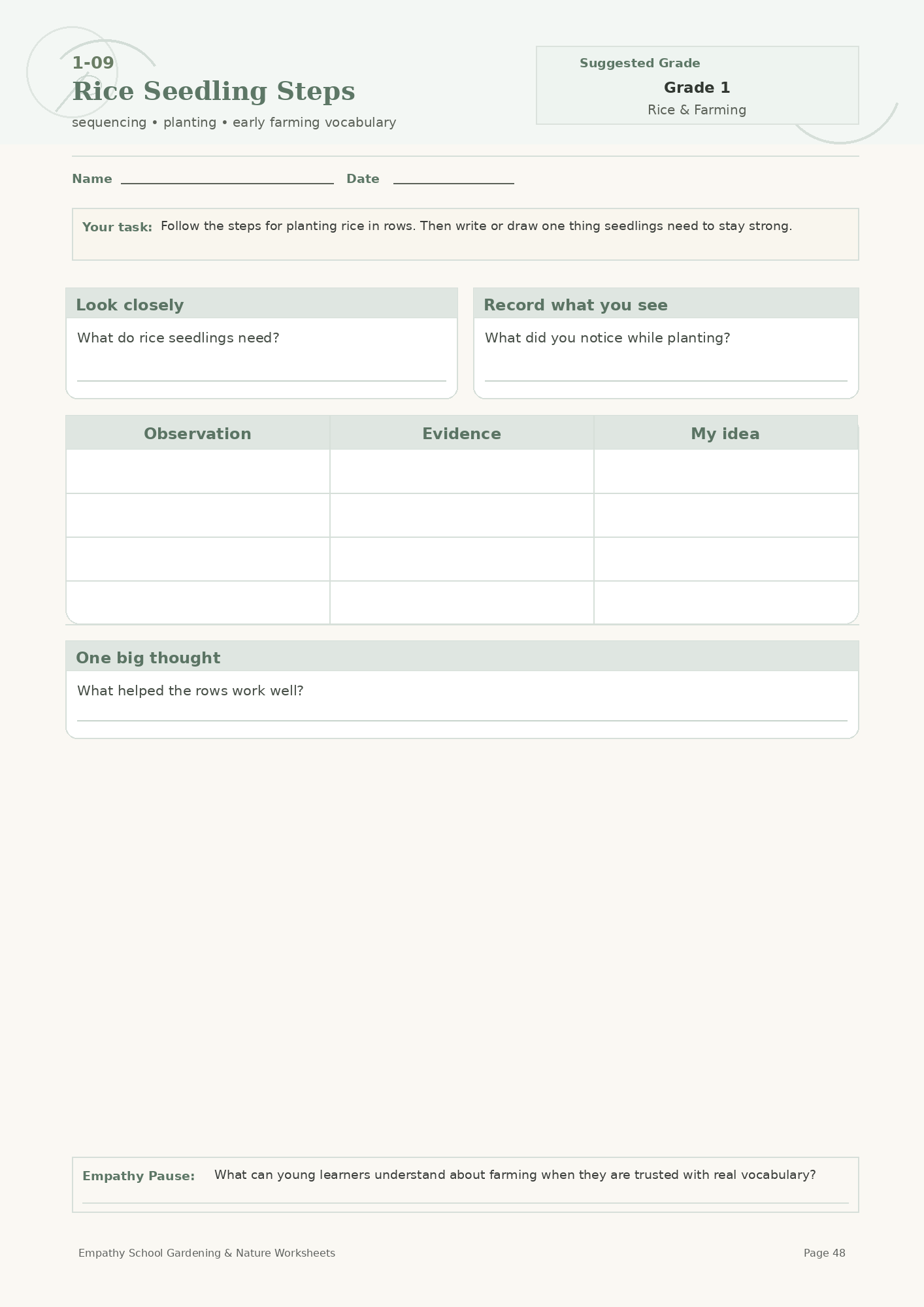
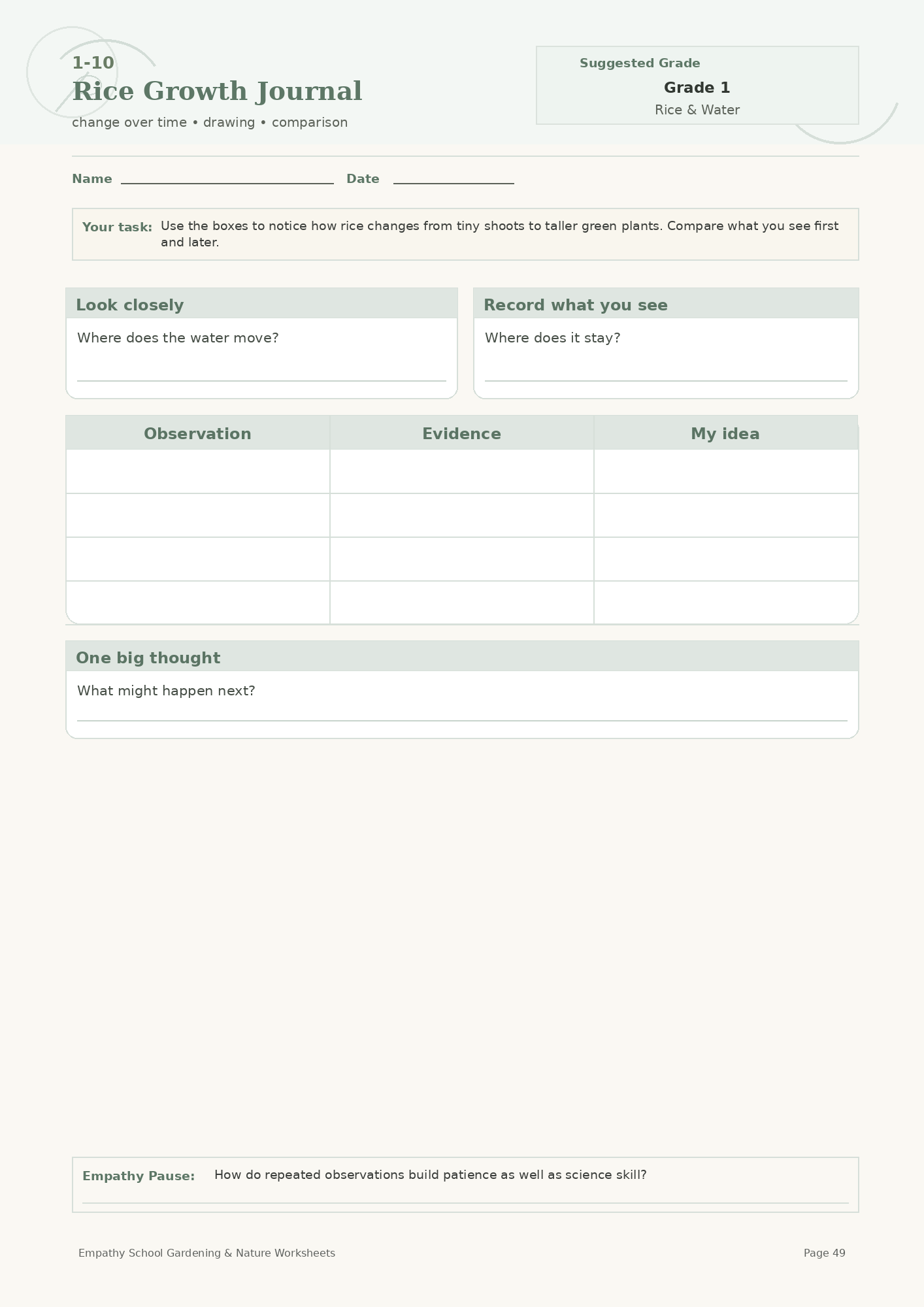
Grow a tray. A shallow container of wet soil and a few seedlings gives you a rice plant in the classroom, and everything from planting to harvest becomes observable.
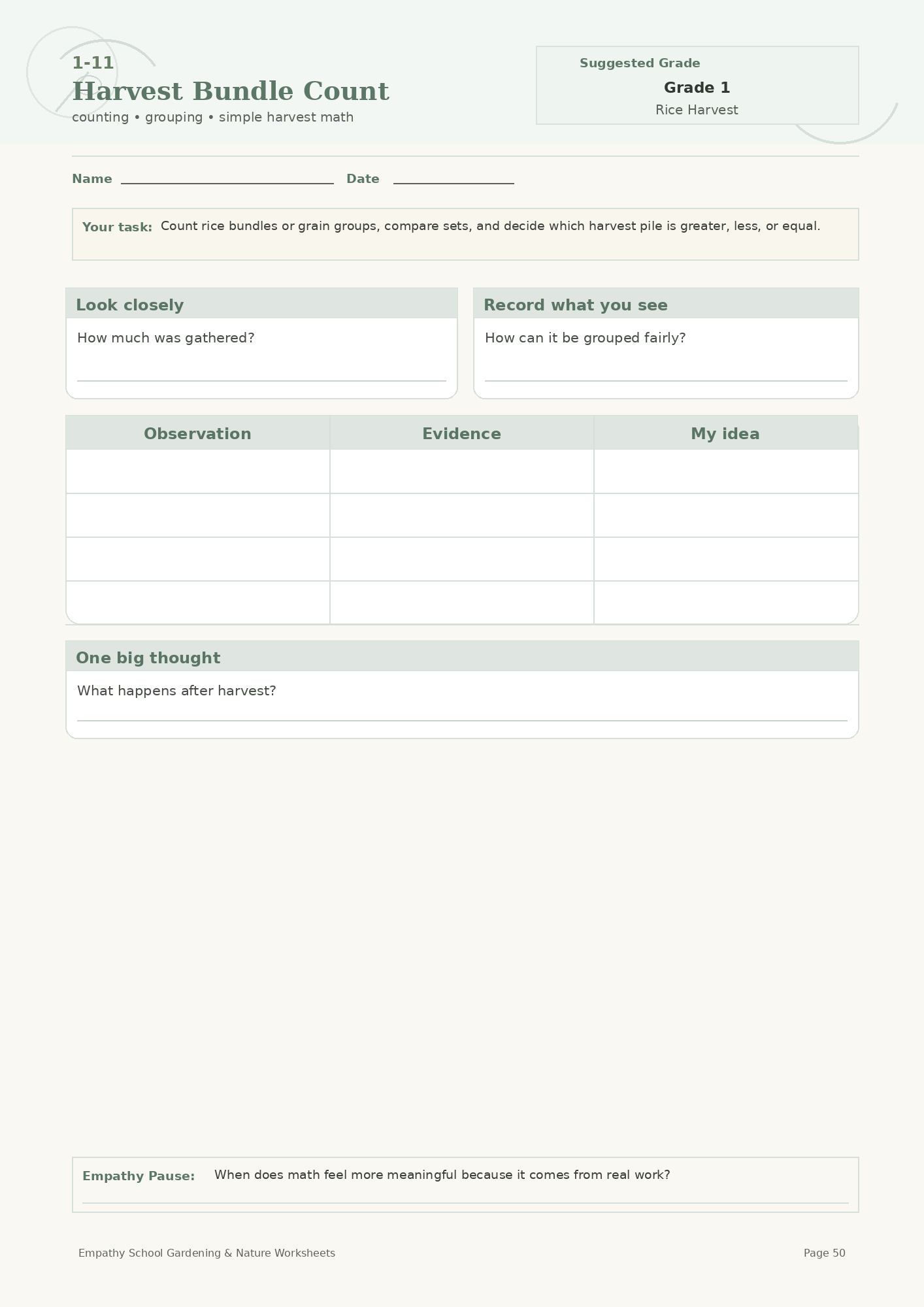
Bundle harvested stalks into tens and count the bundles. It is place value with string, and the total will be small enough to be disappointing, which is the most valuable part.
Worth knowing
Ask a parent or grandparent who grew up around rice to come and lead a session. Those have consistently been our best lessons and they cost nothing.

Eric Gonzalez-Payne
Founder and curriculum author
Ed.M. in Educational Leadership, Harvard Graduate School of Education
Published by Empathy Global LLC
LinkedIn
For the full social and emotional learning programme, see the Empathy Curriculum at empathy.kids.