A Mud Kitchen That Does Not Become Chaos
by Eric Gonzalez-Payne
Decide the water supply before anything else
This is the whole thing. Unlimited water gives you a flood and a session about splashing. No water gives you a dry sandpit with pots in it.
A filled drum or a few buckets, refilled by you, is the right answer. Finite water forces children to make decisions about it, which is where the thinking is.
Give containers of obviously different sizes
Not a matching set. A tiny cup, a medium jug, a large pot. The difference is what turns stirring into a question about how many.
Once a child asks how many small ones fill the big one, you have volume, three years before anyone names it.
Put it somewhere it can be wet
Not next to the reading corner. Not on a surface that becomes slippery. Ideally on grass or gravel with drainage, in shade, near the tap.
What to put in it
Real kitchen equipment that has been retired. Metal pots, sieves, ladles, muffin tins. Children treat real tools differently from plastic toy ones, noticeably.
Plus natural material for the cooking. Petals, leaves, seeds, grass.
The rules that are worth having
Nothing goes in mouths. Mud stays in the mud kitchen area. Everything gets rinsed and put back at the end.
Three rules. Not fifteen.
The end of session routine is the whole management strategy
Five minutes, everyone, tools rinsed and back on the shelf. If this is skipped once it will not happen again, and within a fortnight you will have a mud kitchen nobody wants to run.
Eric Gonzalez-Payne
Founder and curriculum author
Ed.M. in Educational Leadership, Harvard Graduate School of Education
Published by Empathy Global LLC
LinkedIn
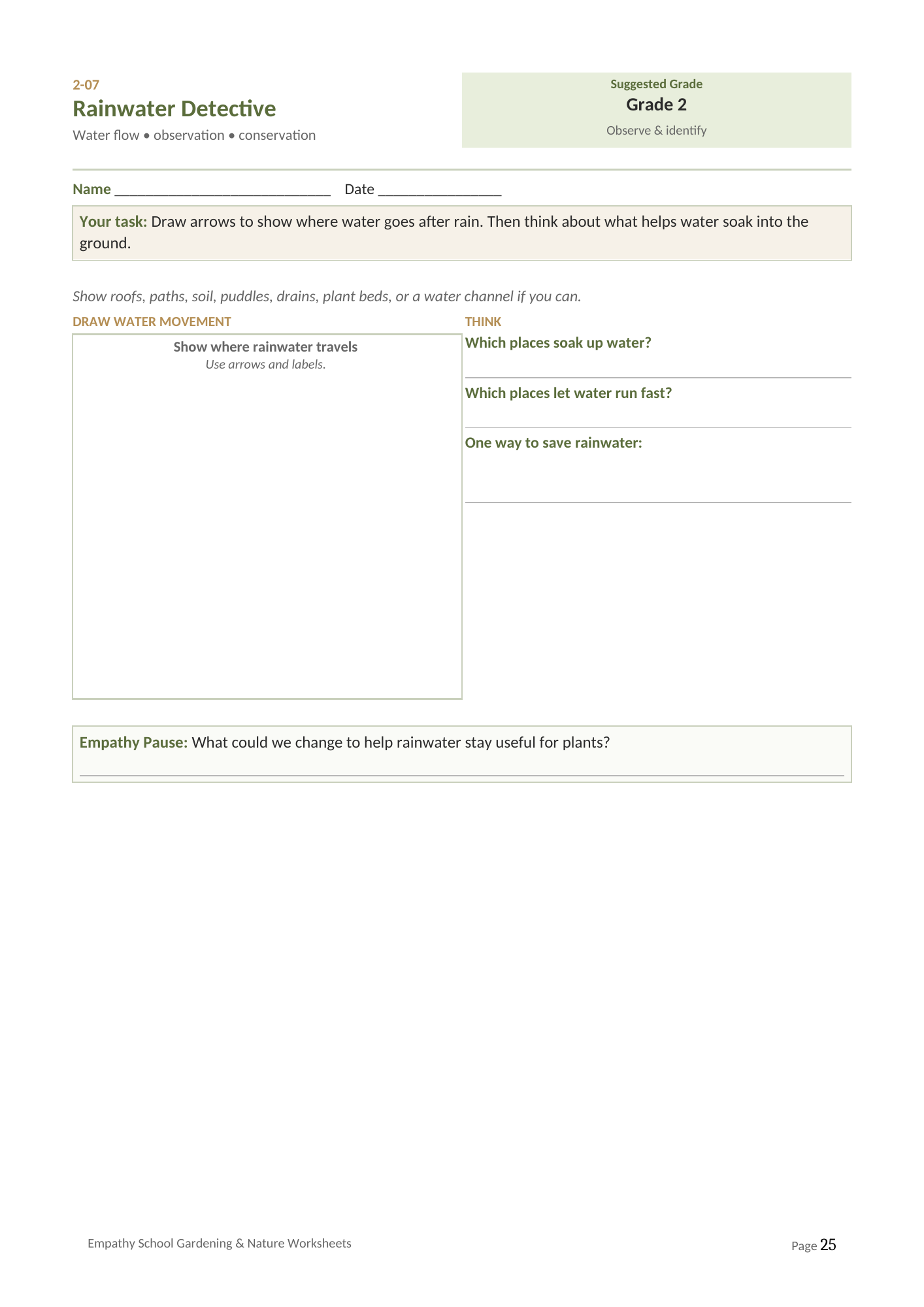
For the full social and emotional learning programme, see the Empathy Curriculum at empathy.kids.