Lemongrass
by Eric Gonzalez-Payne
*Cymbopogon citratus*
How to know it
A dense clump of grey green grass, waist high, with long flat blades that have sharp edges. It grows outward from the centre in a fan. The base of each stalk is pale and thick, and that is the part sold in markets. Nothing else in a garden smells like it.
What it does
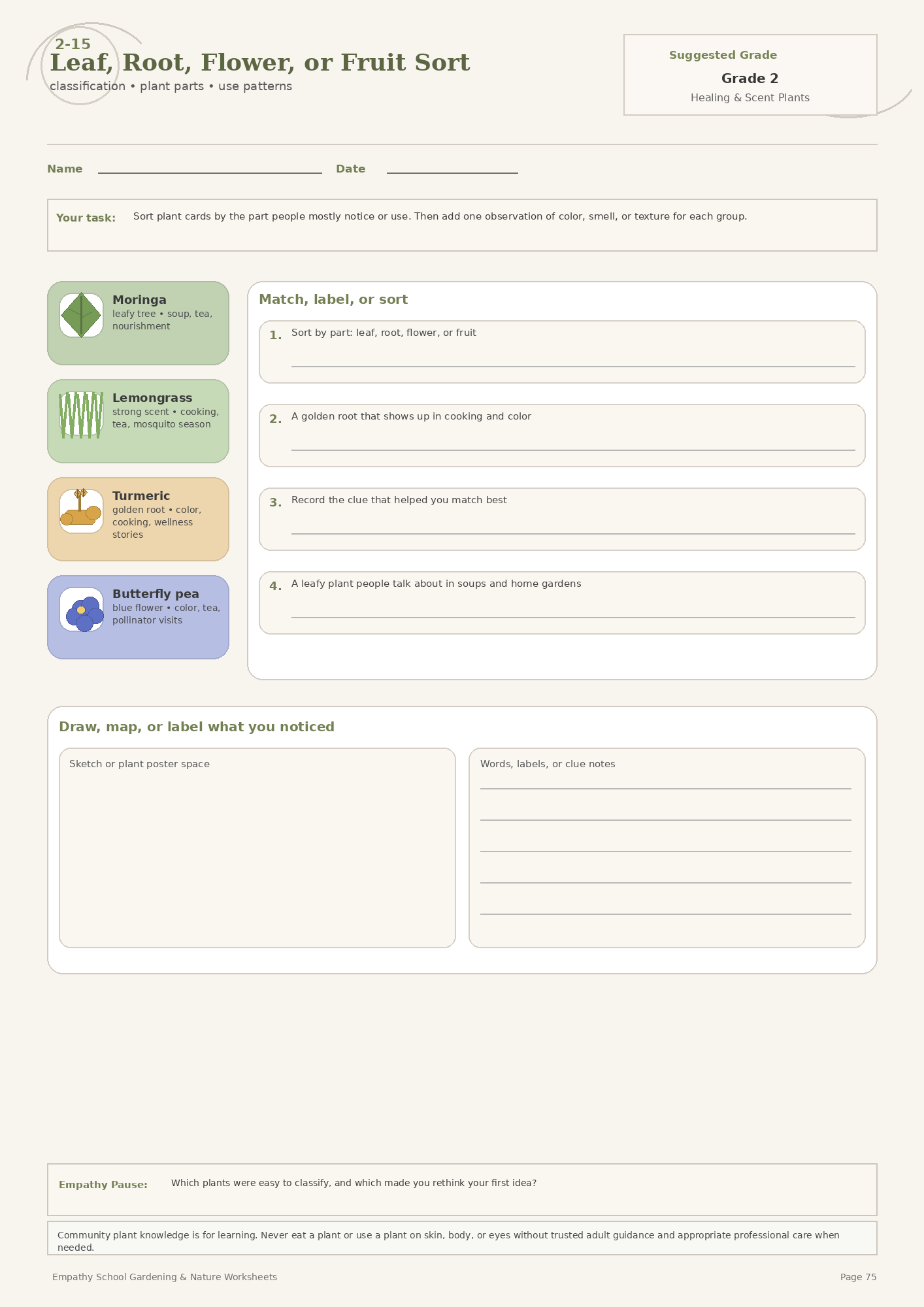
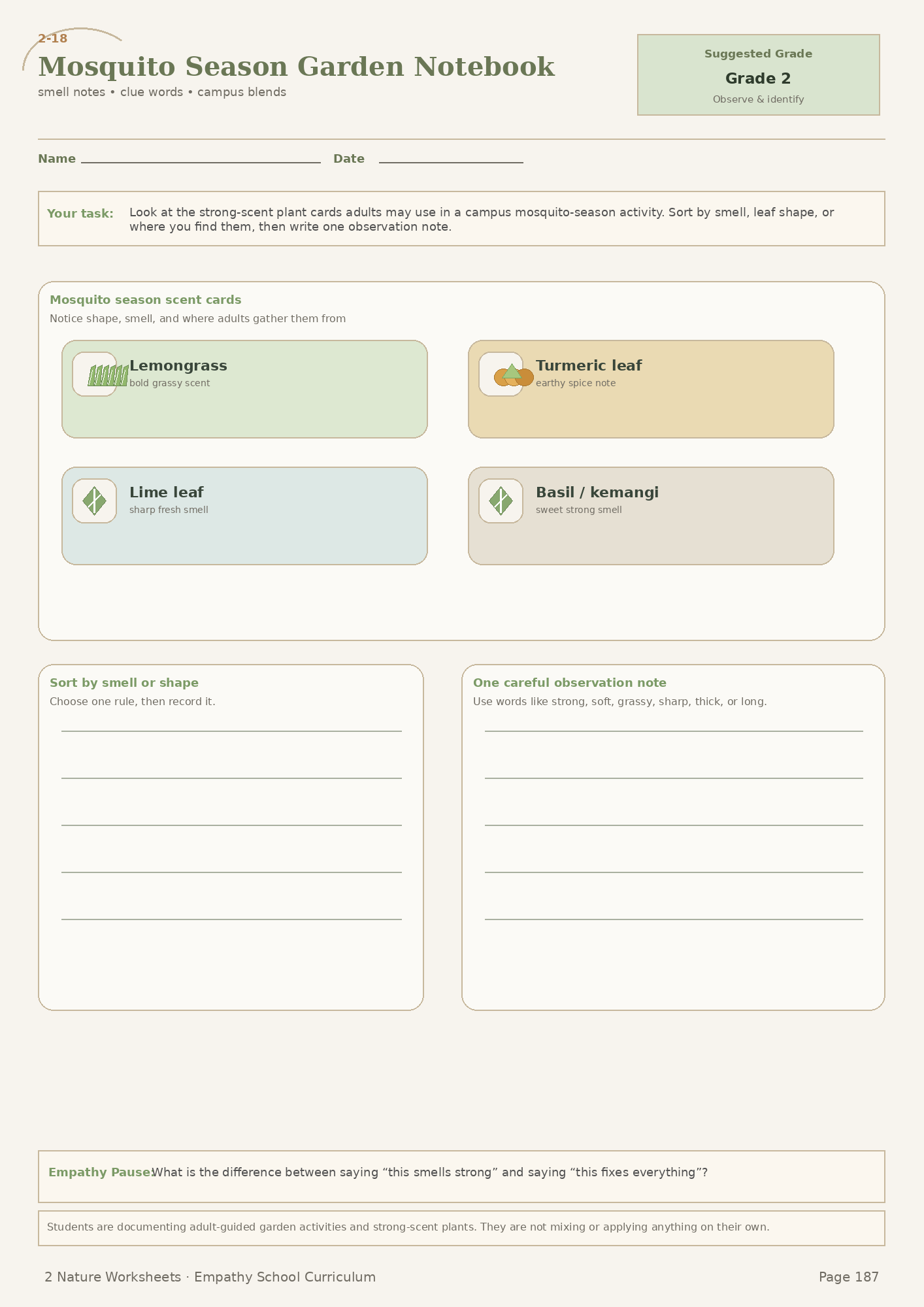
Crushed lemongrass releases citral, which mosquitoes avoid. This is the same compound in citronella candles. Undisturbed plants do very little, which is why crushing the leaf matters and why planting it as decoration achieves nothing. In cooking it flavours soups and curries across the whole region. Traditionally it is also brewed as a tea for stomach upset.
Safety
Safe to touch and safe to taste. The leaf edges are genuinely sharp and can give a paper cut style graze, so show children to run a hand along the blade rather than across it.
Two things to do with children
Crush a leaf and pass it round. Ask what it smells like before telling anyone the name. Children say lemon, sweets, and cleaning spray, all of which are correct and lead somewhere.
Plant a clump next to wherever children sit outside, then get them to crush a few leaves at the start of every session. It becomes a routine, and it works.
Worth knowing
A clump splits easily. Dig one up, pull it into three, replant all three, and you have tripled your supply for nothing. Do this at the start of the wet season.

Eric Gonzalez-Payne
Founder and curriculum author
Ed.M. in Educational Leadership, Harvard Graduate School of Education
Published by Empathy Global LLC
LinkedIn
For the full social and emotional learning programme, see the Empathy Curriculum at empathy.kids.