Twelve Plants to Start a Preschool Garden
by Eric Gonzalez-Payne
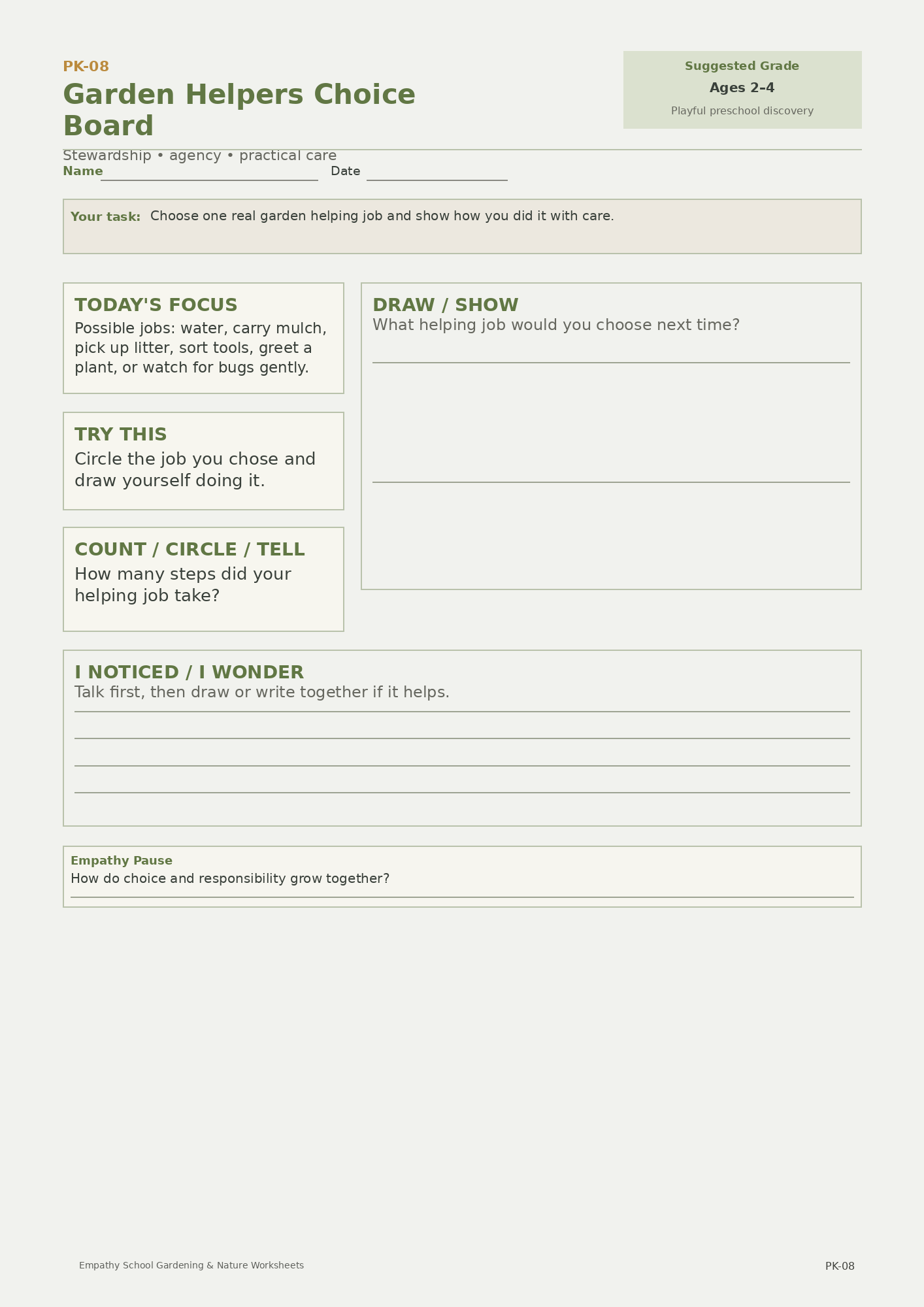
The selection rule
Safe to touch, hard to kill, useful for teaching, and available cheaply in this region. Everything below meets all four.
The twelve
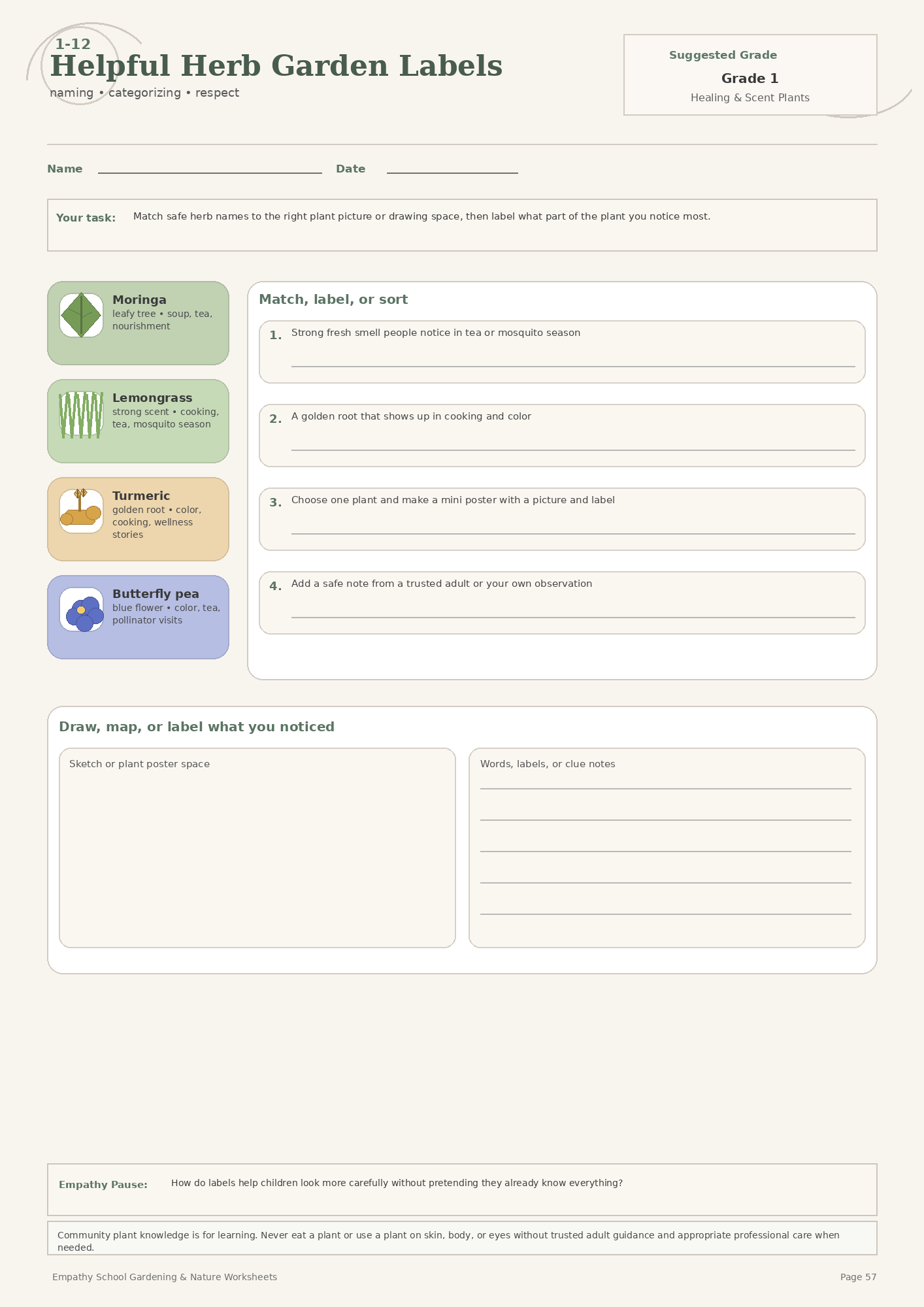
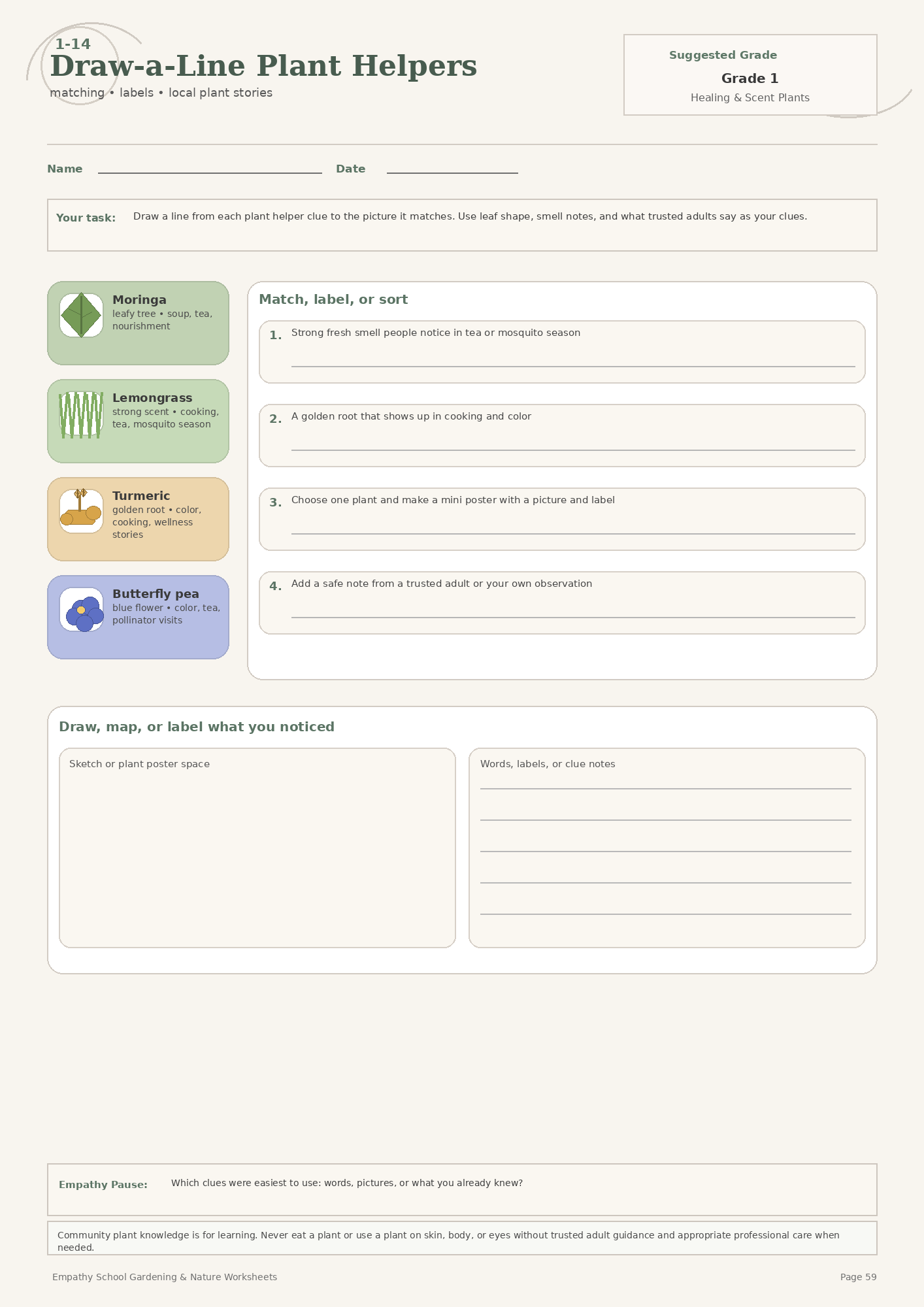
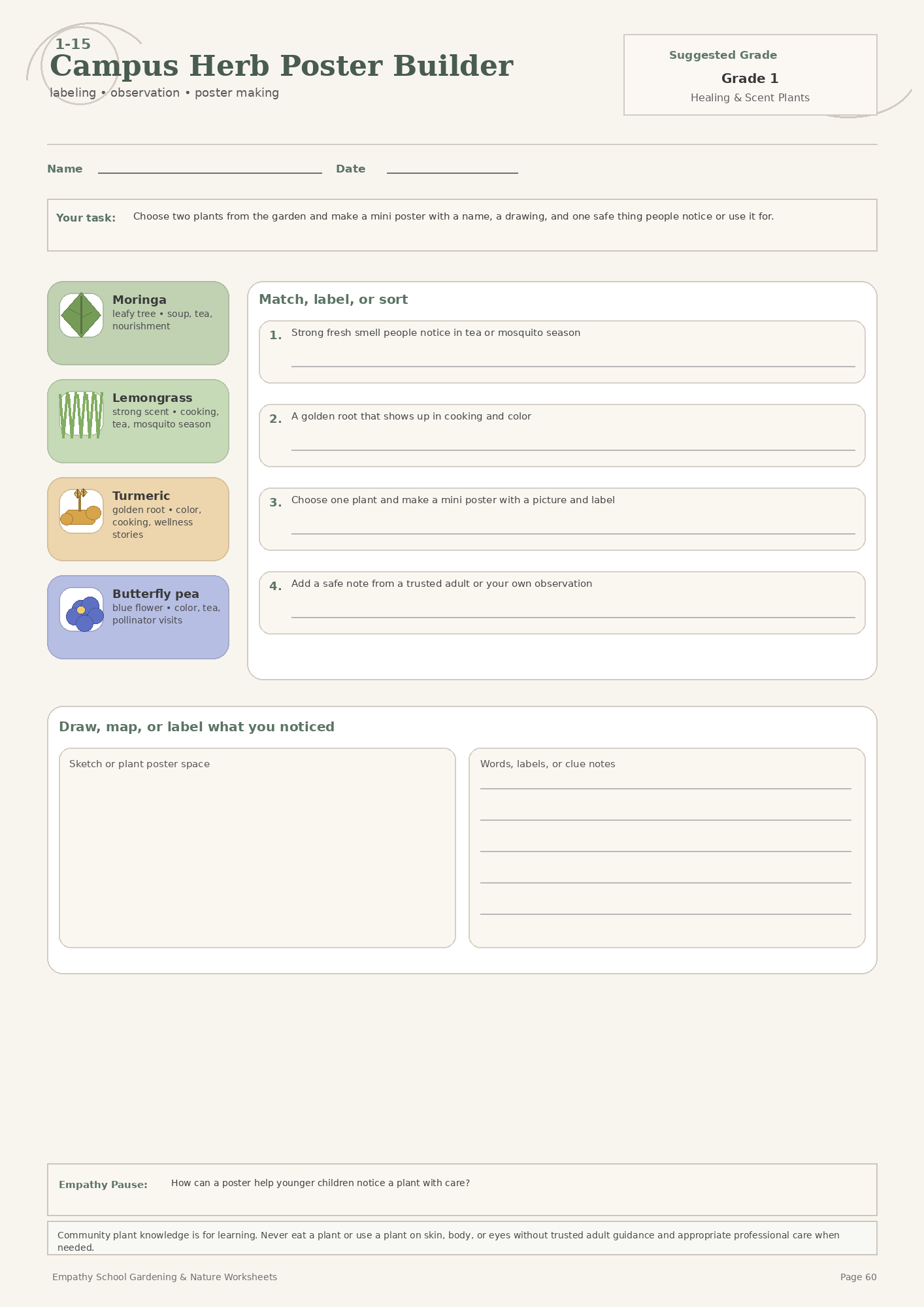
Lemongrass. Crush and smell, mosquito science, splits free into more plants.
Pandan. Sweet smell, completely safe, thrives on neglect.
Mint, in a pot. Cooling sensation, fast, escapes if planted in the ground.
Basil. Grows from seed in days, three varieties smell entirely different.
Butterfly pea. Blue flower that turns pink with lime. The best chemistry you can do with a four year old.
Marigold. Pest control with a visible job, bright, and useful for offerings.
Aloe. Thick leaves full of gel, survives anything, teaches water storage by touch.
Sweet potato. Roots from a cutting, sprawls, and the harvest is a genuine surprise.
Kangkung. Grows in a tub of water, harvest in three weeks, regrows after cutting.
Turmeric or ginger. Dull above ground, astonishing below. Teaches that the useful part is hidden.
Papaya. Fast, from seeds the children ate, and fruits within a year.
Mimosa pudica. Folds when touched. If it already grows wild on your site, you have it free.
Where to put them
Near where children already walk. A garden at the back of the site is a garden nobody visits.
Pots at child height. We had ours on a bench for a year and the daily routine never took hold until we moved them down.
What to add next
Once these are established: hibiscus for flower dissection, moringa for the water clearing demonstration, lime for smell, and a rice tray.

Eric Gonzalez-Payne
Founder and curriculum author
Ed.M. in Educational Leadership, Harvard Graduate School of Education
Published by Empathy Global LLC
LinkedIn
For the full social and emotional learning programme, see the Empathy Curriculum at empathy.kids.