Keeping Children Safe Outdoors in the Tropics
by Eric Gonzalez-Payne

Heat is the actual risk
Not snakes. Heat, and it is underestimated constantly.
Do not run outdoor sessions between about eleven and two. Morning is better in every way. Shade, water available at all times, and hats. A child who has stopped complaining and gone quiet in the heat needs attention immediately.
Water
Have it outside with you, not back in the classroom. Children will not ask to go and get it, they will just not drink.
Sun
In equatorial sun a child burns faster than most adults expect. Shade, timing and covering up work better than relying on sunscreen you have to reapply.
Insects
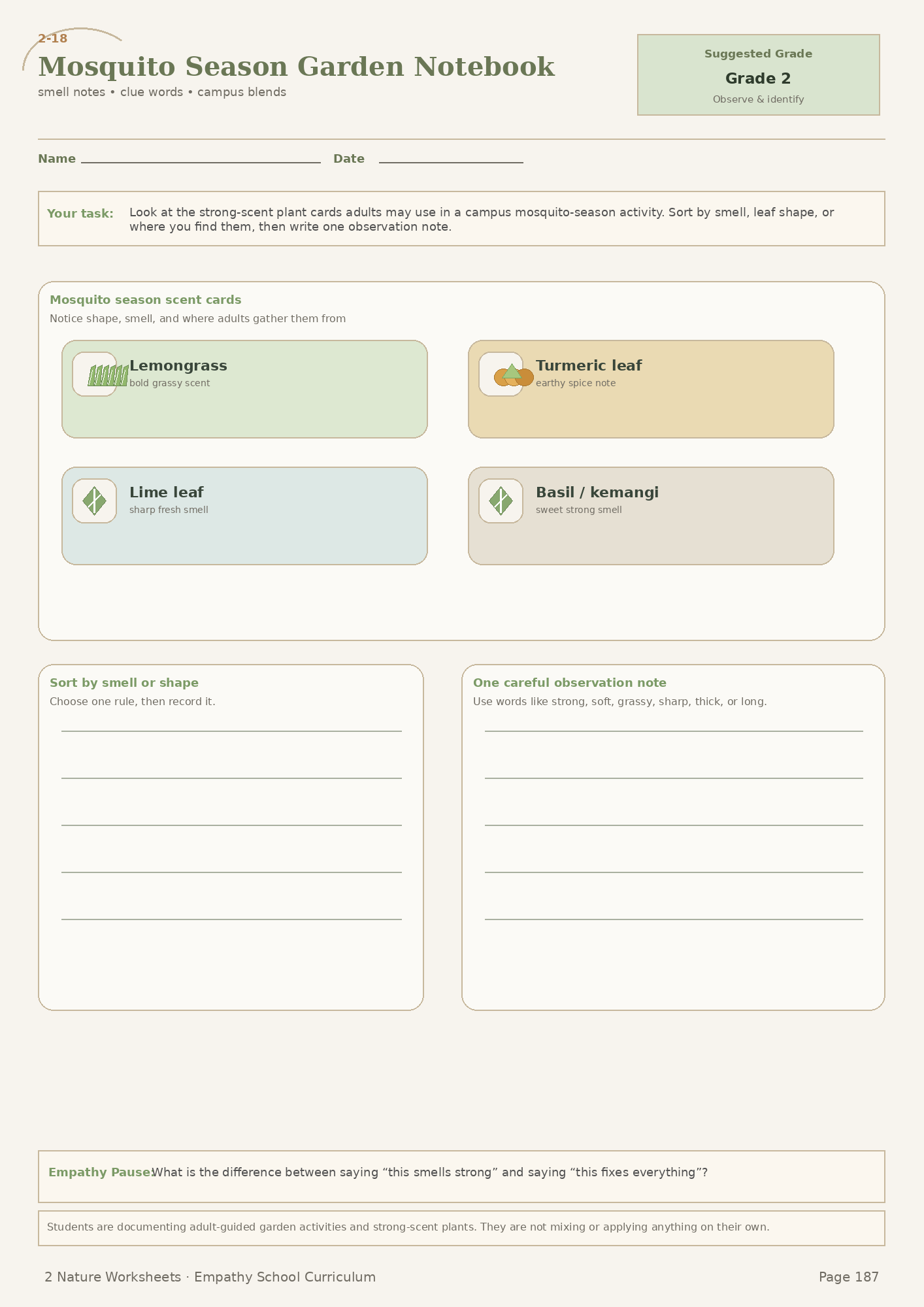
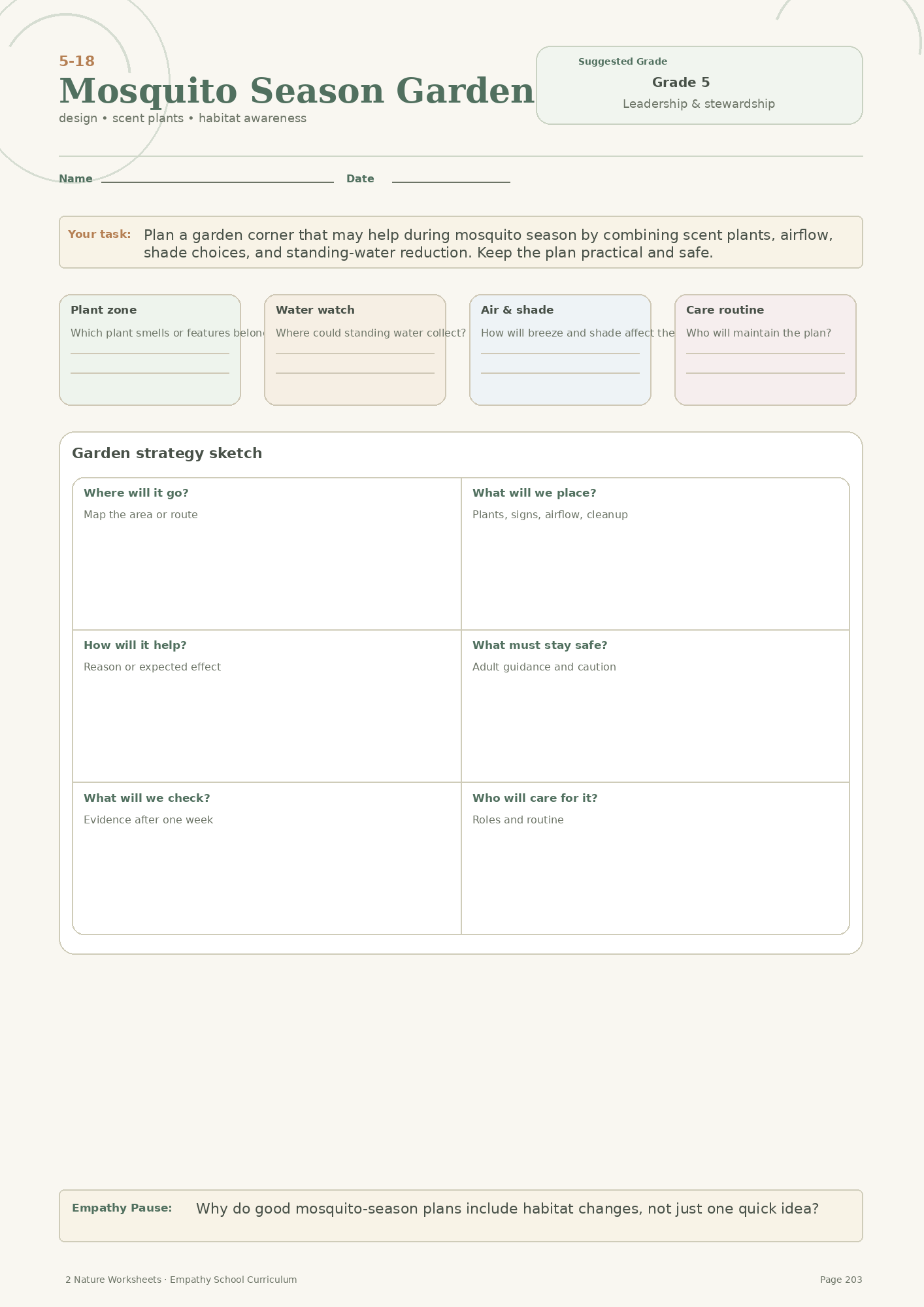
Mosquitoes are the genuine concern because of what they carry. Standing water removal beats every plant and every spray, and it is the thing to actually do.
Ants are everywhere and mostly harmless, but check any surface children will sit on. In the tropics an ant trail relocates overnight.
Bees and wasps, know whether any child has an allergy before you go outside, not after.
Plants
Learn the ones on your own site that matter. Frangipani sap irritates. Anything with fine hairs on a caterpillar or a leaf is worth avoiding. Raw cassava and raw taro are genuinely dangerous and should be taught as such to older children rather than hidden.
The general rule children can actually hold: we do not put anything in our mouths outside unless an adult has said this one, today.
Falling fruit
Coconuts and jackfruit cause real injuries. Do not let children sit under a fruiting tree, and have fruit harvested rather than left to drop.
What is usually fine
Mud, rain, bare feet, insects in hands, dirty hands before washing. These are the things people worry about and they are not the risks.

Eric Gonzalez-Payne
Founder and curriculum author
Ed.M. in Educational Leadership, Harvard Graduate School of Education
Published by Empathy Global LLC
LinkedIn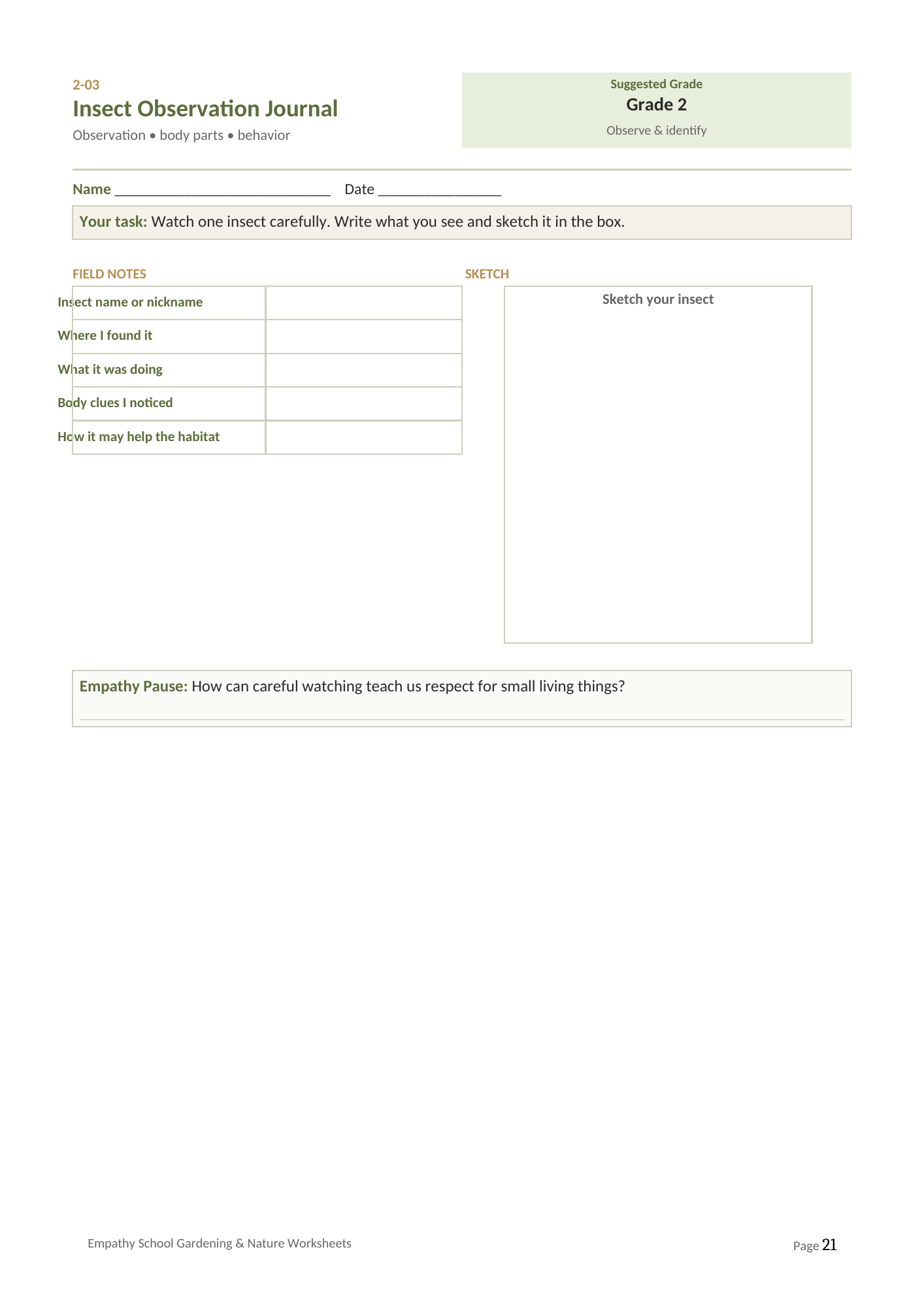
For the full social and emotional learning programme, see the Empathy Curriculum at empathy.kids.