Worm and Soil Detective
by Eric Gonzalez-Payne
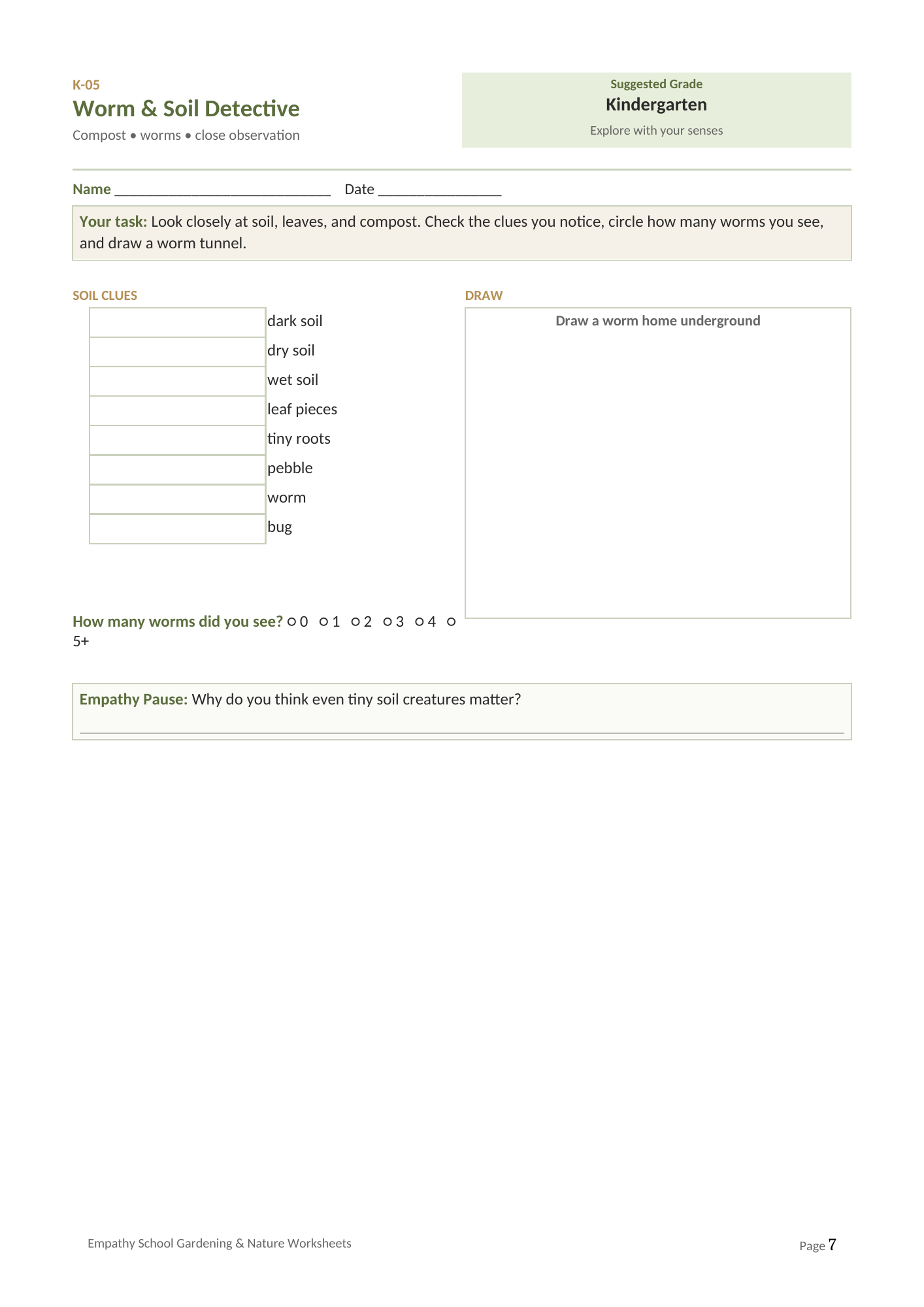
Mark out a square roughly the size of a dinner plate. Dig it carefully. Count what you find.
This is a real sampling method, scaled down. Kindergarteners understand it immediately because the boundary is visible, and the counting stays under twenty. The sheet has a drawing box, a tally row, and one question at the bottom that children argue about for a surprisingly long time, which is whether the worms should go back.
They should. The page says so, gently.
What to expect: in a tropical garden you will find ants long before you find worms, and the ant count will be uncountable. We turned that into part of the lesson. Some things can be counted and some can only be estimated, and knowing which is which is a skill.
Run it after rain. Dry season soil gives you almost nothing and a disappointed class.
Eric Gonzalez-Payne
Founder and curriculum author
Ed.M. in Educational Leadership, Harvard Graduate School of Education
Published by Empathy Global LLC
LinkedIn
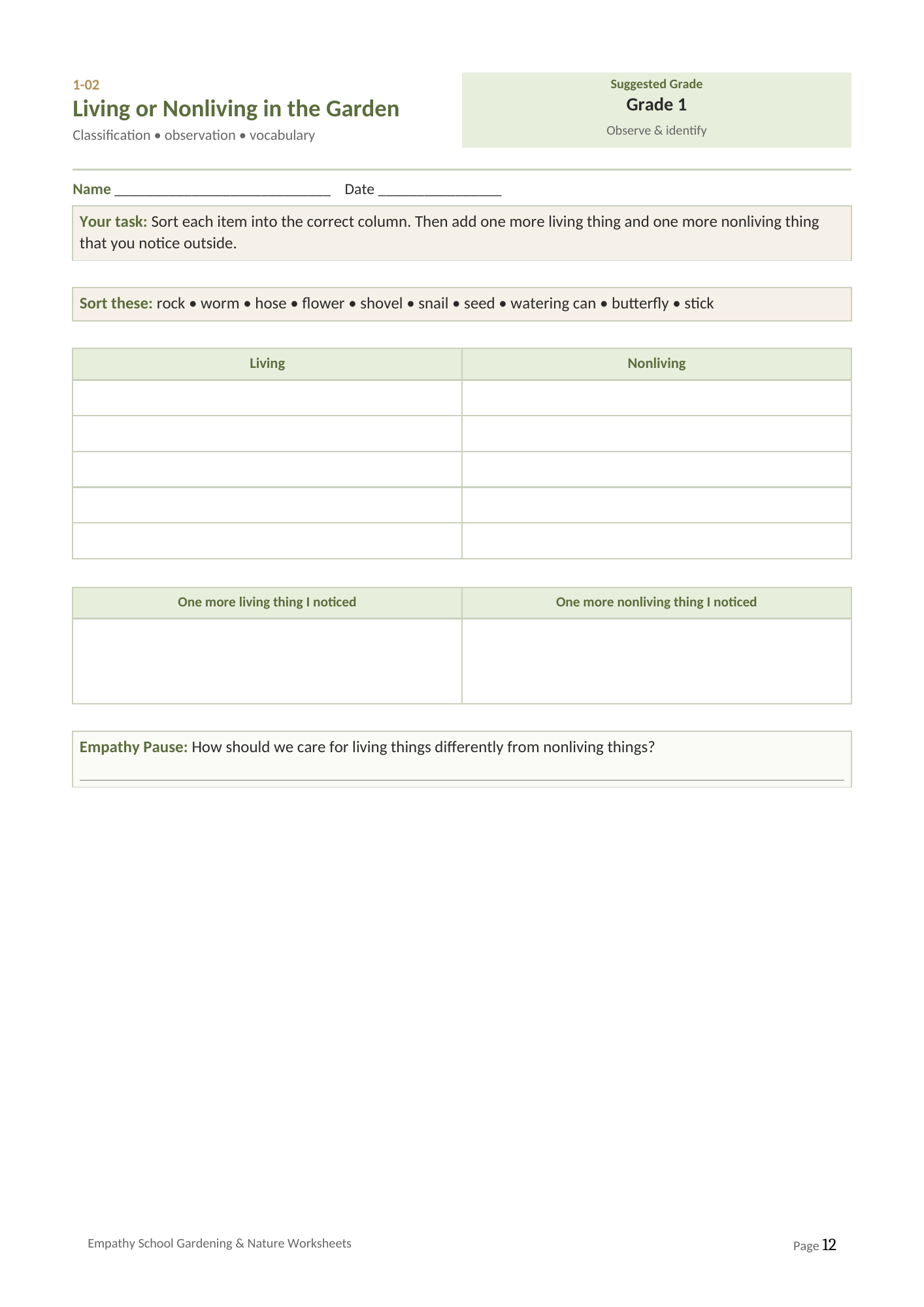
For the full social and emotional learning programme, see the Empathy Curriculum at empathy.kids.