Making a School Garden Survive the Holidays
by Eric Gonzalez-Payne
This is the number one killer
Not pests, not soil, not enthusiasm. Three weeks with nobody watering.
Plan for it before you plant anything.
Decide who waters, by name, in writing
Not the caretaker will probably do it. A named person, told in advance, with a key and a written instruction of what needs water and how often.
If there is no such person, you must design around that, and the rest of this page is how.
Mulch heavily before you leave
Thick mulch on every bed and every pot. A well mulched bed in the tropics can go several days without water. An unmulched one cannot go one. This alone changes what survives.
Move the pots
Group all containers together in shade before the break. Grouped pots dry more slowly than scattered ones and shaded pots dry far more slowly than sunny ones.
Time the crop to the term
Plant so the harvest lands before the break rather than during it. This sounds obvious and requires you to count backwards from the holiday date, which almost nobody does.
Choose survivors for the long breaks
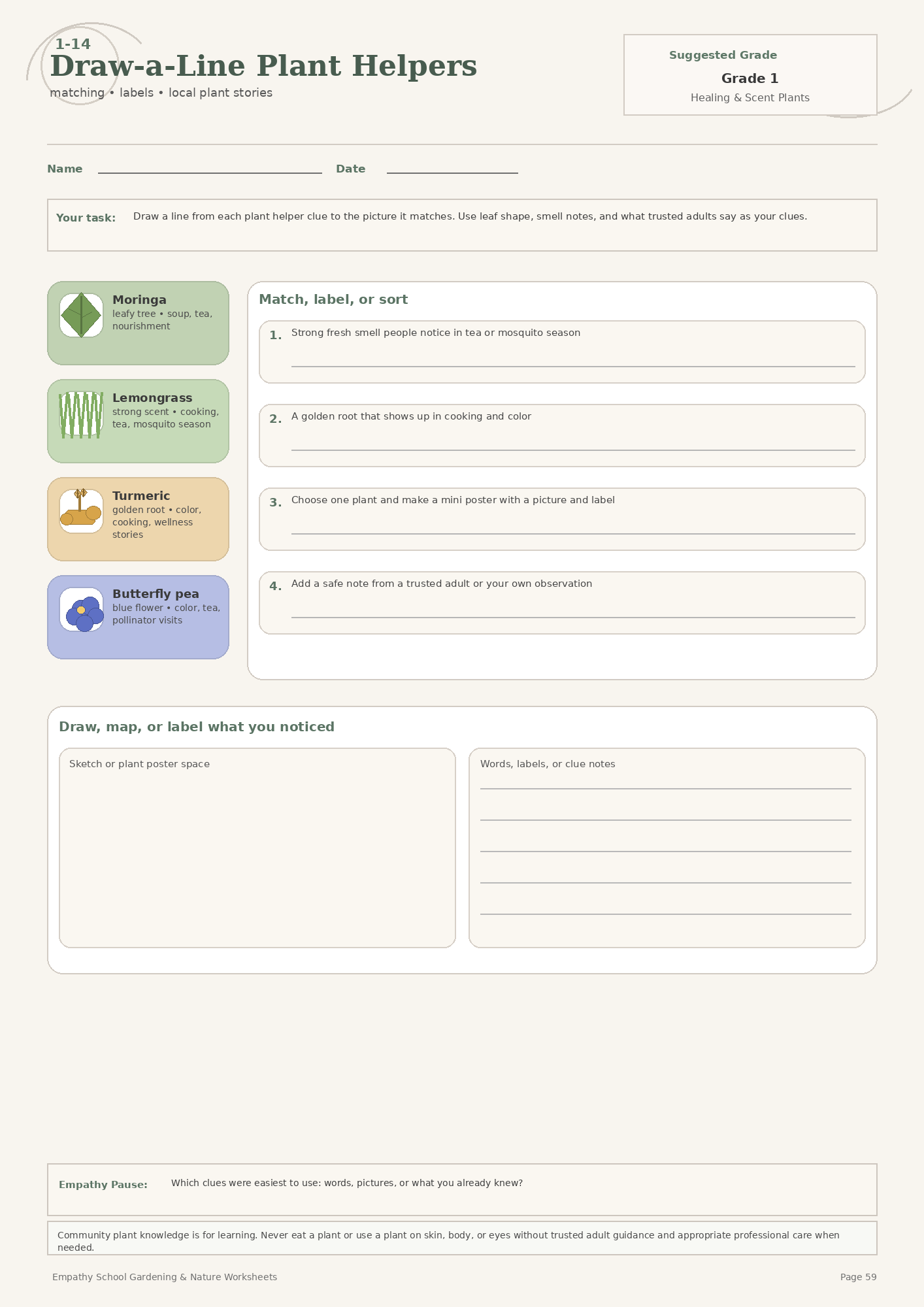
Some plants simply do not need you. Lemongrass, pandan, aloe, snake plant, sweet potato, banana, moringa, cassava. Build the permanent structure of the garden out of those and use the fussy things only within a term.
Wick watering for the small stuff
A bottle of water with a cloth wick into the pot will keep a container going for a week or two. It is not elegant and it works.
The honest version
If nobody will water it and you cannot mulch it, plant only the survivors and accept that the beds are a term long project rather than a permanent one. That is a legitimate design, and it is much better than a dead garden and a demoralised class.

Eric Gonzalez-Payne
Founder and curriculum author
Ed.M. in Educational Leadership, Harvard Graduate School of Education
Published by Empathy Global LLC
LinkedIn
For the full social and emotional learning programme, see the Empathy Curriculum at empathy.kids.