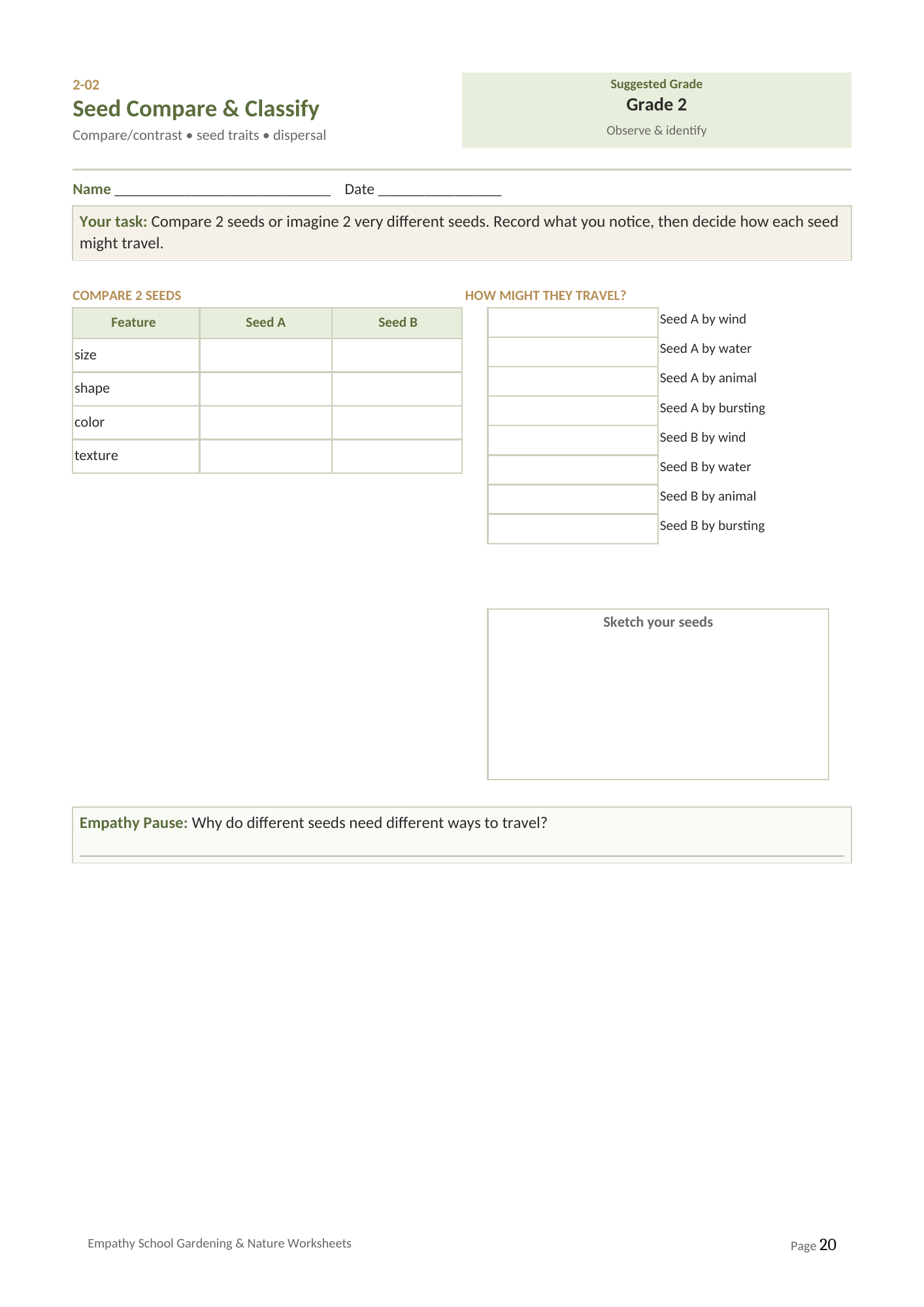
Eight seeds on a tray, four columns to fill, then group them however the evidence suggests.
The grouping is open. Two children with the same data will produce different groups and both will be defensible, which is a fair picture of how classification actually works and a rare thing to show at seven.
Size, shape, colour, hardness. We use mung bean, corn, rice, pumpkin, papaya, chilli, tamarind and a mango stone for range.
The page has the comparison grid, a grouping space, and a line asking the child to name their rule. Naming the rule is the assessment. A child who groups correctly but cannot say why has done something different from one who can.
Eric Gonzalez-Payne
Founder and curriculum author
Ed.M. in Educational Leadership, Harvard Graduate School of Education
Published by Empathy Global LLC
LinkedIn
For the full social and emotional learning programme, see the Empathy Curriculum at empathy.kids.